
I logged in to Overwatch 2 this Tuesday morning, genuinely excited. The mid‑season patch was supposed to drop later that day, and like many other Mei mains, I’d been counting down the hours. The hero I’ve loved since the first Overwatch—the one who can freeze enemies in their tracks and wall off a charging Reinhardt—has been absent from the game for days due to an exploit. Word was the patch would bring her back, fix the broken Ice Wall ability, and sprinkle in a handful of balance tweaks. I even stockpiled a few credits in case they refreshed the store with something cozy.
Then, right as the update should have gone live, a familiar lump formed in my throat when Blizzard posted a forum update. A critical issue had been discovered. The patch was being pushed. Not for a few hours, but a full two extra days—until Thursday at 11 a.m. PST. My coffee suddenly tasted bitter.
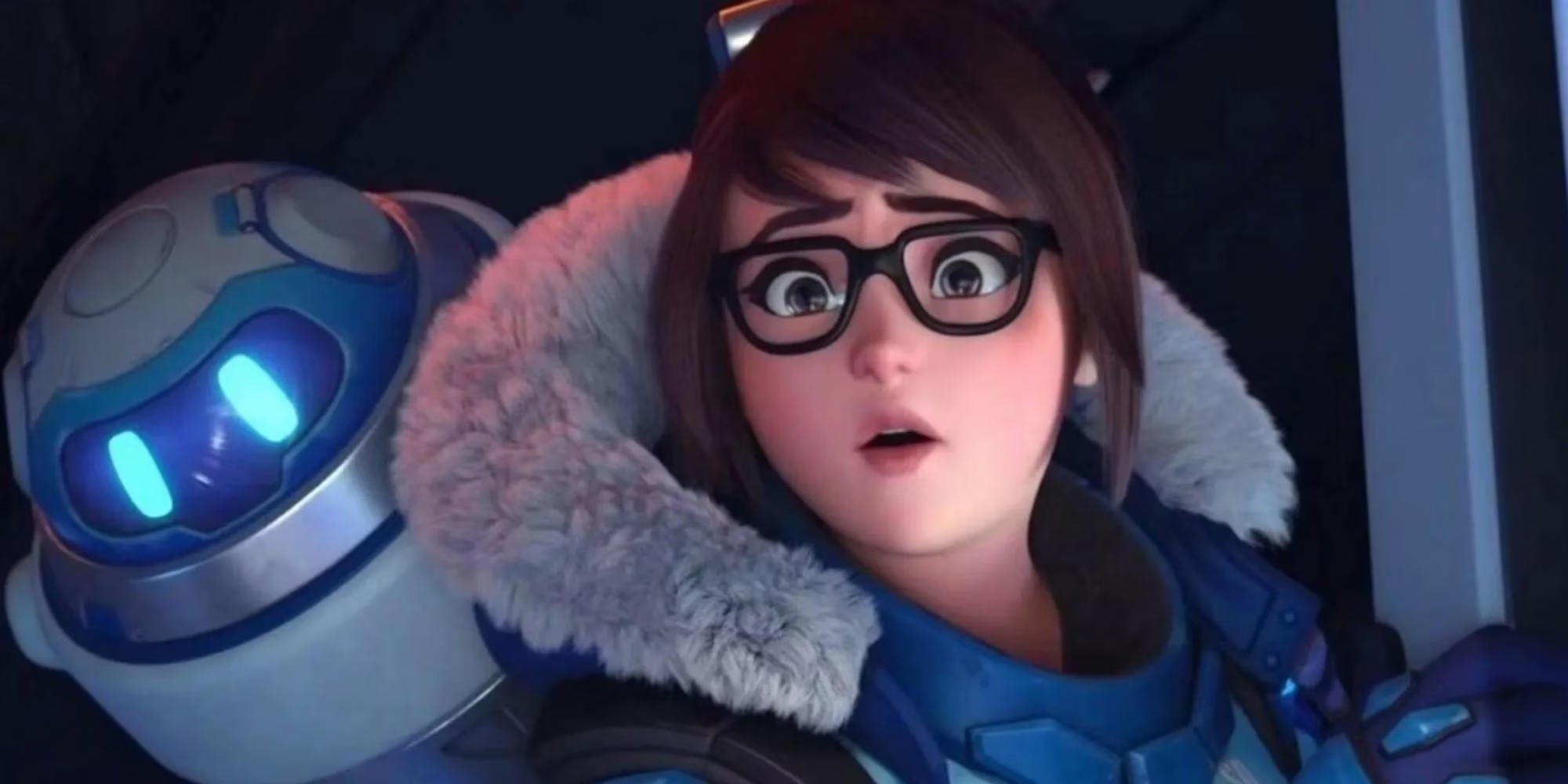
I’m not one to rage at every little hiccup, but this one stung. As someone who has mained Mei since the beta days, I’ve seen my meteorologist hero go through more than her share of drama. The original Overwatch had its own quirks, but Overwatch 2 seems to court these letdowns. The exploit that got Mei removed in the first place was nothing short of infuriating—players could use her Ice Wall to slip through boundaries, hiding in unreachable spots where they could cap points or stall indefinitely. Not exactly the spirit of fair play. Blizzard acted quickly yanking her from the roster, but the silence between then and the promised patch has been deafening.
It makes me wonder: is it really that hard to push a stable update? Or does the codebase tug at threads we can’t see, where fixing one bug unravels three others? The team cited an unspecified critical issue as the reason for the delay. That’s commendable transparency, I suppose, but it doesn’t warm the icy hole left in my hero lineup. Challenges reset on schedule and the store did refresh—I noticed a new Kiriko skin I’m half‑tempted to buy—but none of that replaces the comfort of a freshly returned Mei.
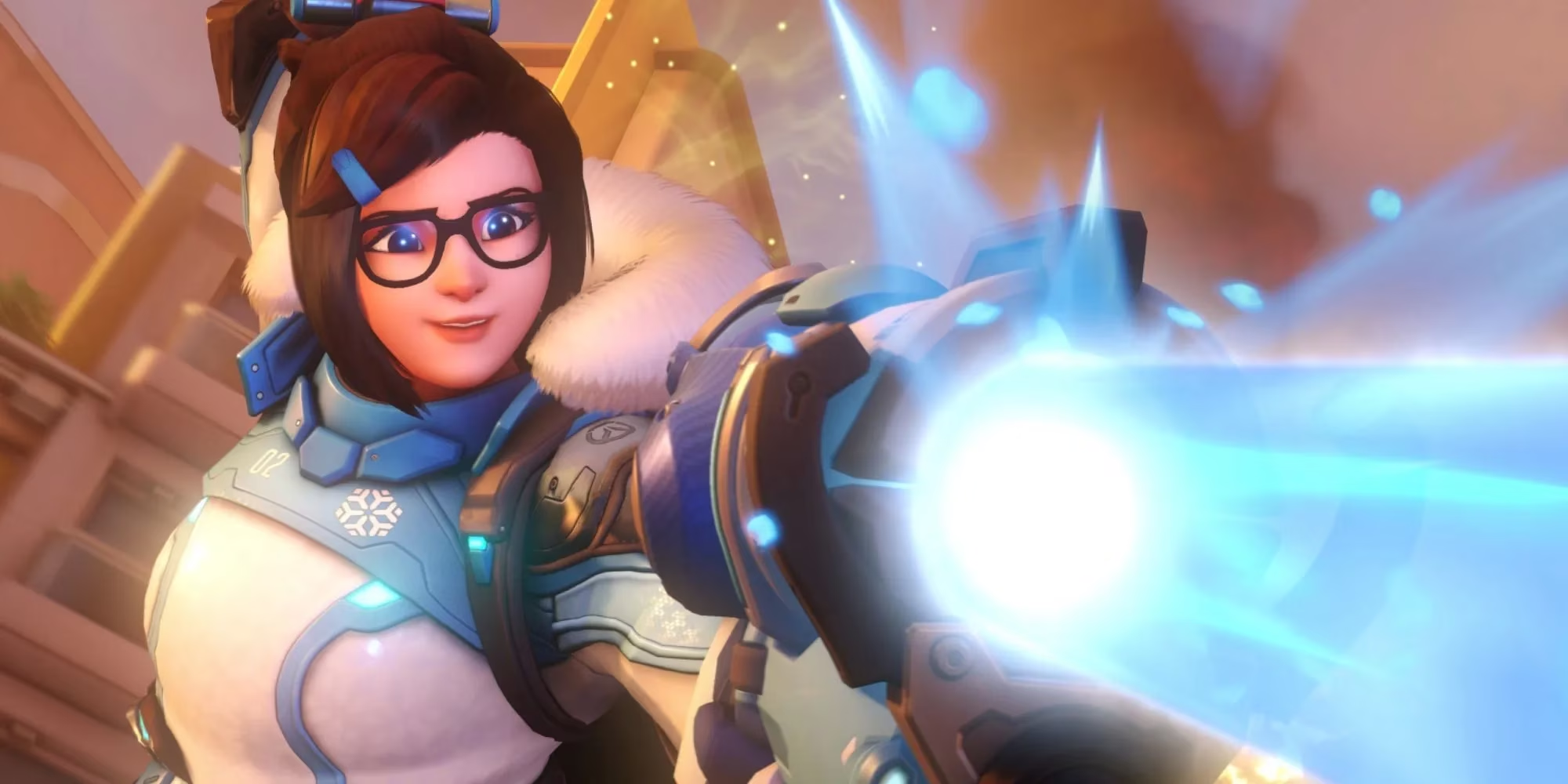
I’ve been filling the Mei void with other heroes. Symmetra’s teleporter shenanigans muffle the pain a little, and Junker Queen’s aggressive brawling keeps my mind off the missing ice walls. But every time I see a choke point, I instinctively want to lift a pillar and split the enemy team. In those moments, the delay feels personal, as if the game is teasing me with the one tool I can’t use.
Let’s step back and look at the bigger picture. Overwatch 2 launched with a litany of issues back in 2022, and though we’re now in 2026, some scars simply refuse to heal. Players still whisper about skins that never transferred from the original game, and the competitive rank system remains a subject of heated debate—is it truly capturing our skill, or just how many times we queue up? The legal storms around Activision Blizzard have also evolved. Microsoft finalized its acquisition a couple of years ago and committed to publishing annual sexual harassment reports, a move toward accountability. Yet here on the battlefield, technical gremlins keep slipping through the cracks. Is it a problem of resource allocation? Are we sacrificing polish at the altar of a relentless content treadmill?
As a player, I don’t need a perfect game. I need one that respects my time. A delayed patch for two days might sound trivial—it’s only 48 hours, after all—but those 48 hours represent evenings of matches where I can’t pick my favorite hero. They represent a friend I was hoping to coach through Mei’s revamped kit, now left hanging. They represent a trust that erodes a little more each time Blizzard says “soon.”
I’m not quitting. I’ll be online Thursday at 11 a.m. sharp, refreshing the client as if waiting for a snow day to be canceled. I’ll probably cheer when the patch notes confirm Mei’s Ice Wall is fixed and she’s back to freezing enemies solid. I’ll even toss a wall in front of my own team’s spawn door just to feel that satisfying thud. But I’ll also be left with a lingering question: when will the next emergency remove Mei, or some other hero, again? In a game that thrives on its ever‑shifting meta, stability shouldn’t be a seasonal luxury. Until then, I’ll keep my thermos warm and my hopes tucked in a deep freeze.
Industry insights are provided by GamesIndustry.biz, and they help frame why a two-day Overwatch 2 patch delay can ripple beyond simple inconvenience: live-service games operate on tightly coupled deployment pipelines where a last-minute “critical issue” often signals a certification, stability, or cross-platform compatibility risk that could be more damaging than postponement. In that context, Blizzard’s decision to hold the mid-season update—while frustrating for Mei mains waiting on an Ice Wall exploit fix—also reflects the broader reality that shipping unstable builds can undermine competitive integrity and player trust even faster than a short content drought.