
Overwatch has always been a game where a bad match can quickly turn into a storm of hate messages, and Overwatch 2 did little to change that reputation. When the sequel launched as a free-to-play title on October 4, 2022, many players noticed that the chat became even more unpleasant. Rather than sticking around to watch teammates argue after a defeat, many simply left the lobby as soon as the match ended.
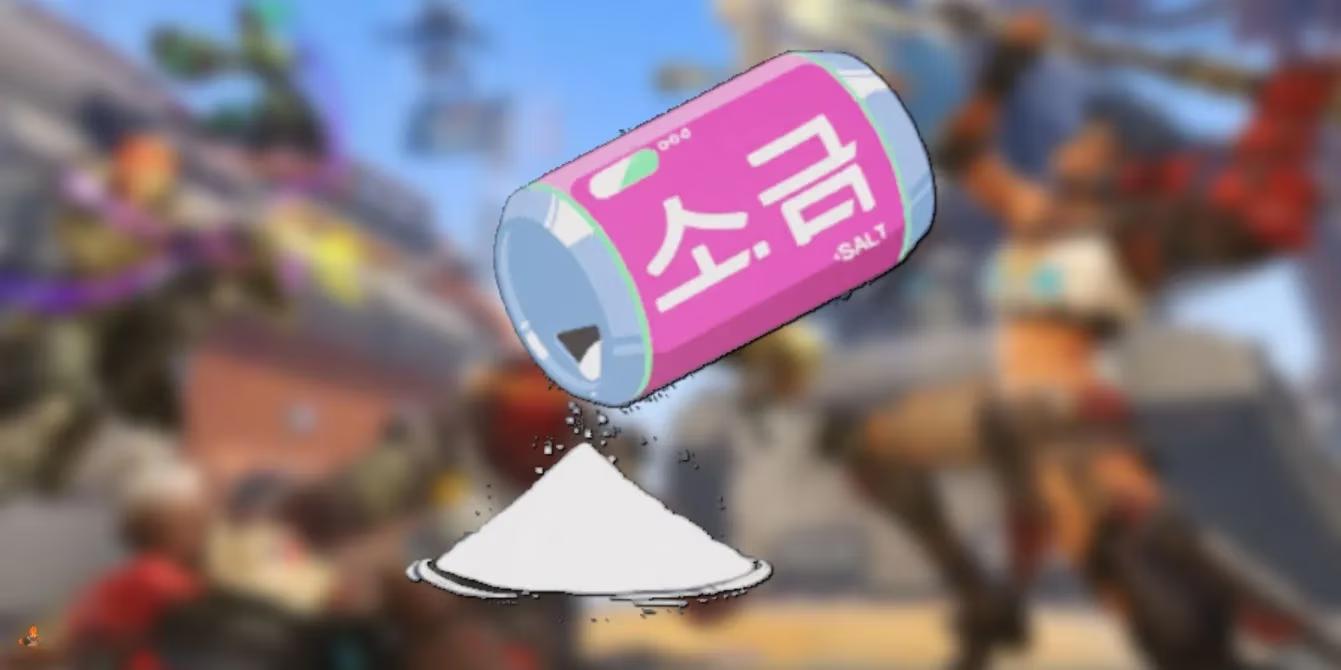
According to community reports, hostile and sometimes outright abusive messages increased after the free launch. With very little gameplay difference between the original Overwatch and the sequel, fans quickly pointed to the new free-to-play model as a likely cause. A larger, more varied player base and a weekly challenge system centered on wins seemed to amplify frustration.
Reddit user Malina_Island posted about the trend in the r/Overwatch subreddit, saying their teammates had become noticeably more toxic since Overwatch 2 went live. They observed that in just one day, they encountered more toxic players in chat than during their entire period playing the original game. Perhaps most tellingly, the user noted that people seemed to feel genuinely attacked when someone tried to stay positive.
What made the atmosphere so uniquely hostile? The answer appears to lie in the game's structure. While the original Overwatch had its fair share of bad behavior, many players believe Overwatch 2's free-to-play economy encouraged a different kind of pressure. The challenge system, as user cruel_frames pointed out, relied heavily on wins. This meant that players who wanted to unlock skins or complete battle pass tasks had a strong incentive to care intensely about every match. When a teammate played casually or simply had an off game, that frustration could boil over into chat.
Another community member, chrono_ark, summed up the sentiment by saying that toxicity simply comes with the territory in free-to-play games. The low barrier to entry, the large anonymous player pool, and the difficulty of meaningfully punishing bad actors all contribute to an environment where people feel free to lash out.
The problem was not limited to Reddit. On the official Overwatch forum, a user named DeadBolt documented a series of abusive messages they received after the sequel went live. At its most extreme, this included being told to "get a noose." That kind of language goes far beyond ordinary trash talk and shows why the community's concerns were so serious.
To understand why the free-to-play shift mattered, it helps to look at the factors:
| Factor | Why It Contributes |
|---|---|
| Larger player base | More people means more potential for negative interactions |
| No cost barrier | New accounts can be created easily after bans |
| Win-based challenges | Players feel punished when teammates do not try hard |
| Anonymity | Less accountability in an impersonal, fast-moving chat |
Key community complaints included:
-
🎮 A free-to-play player pool that expanded too quickly
-
🏆 Weekly challenges that depended almost entirely on wins
-
🚫 Minimal consequences for creating new accounts after bans
-
💬 Fast and anonymous chat that made abuse feel consequence-free
Players can report abusive behavior through the in-game system, but many in the community doubted whether that would be enough. Blizzard had not yet responded to the growing complaints about toxicity at the time, leaving players to wonder whether stronger moderation or design changes would follow. Could a free-to-play competitive shooter ever escape such cycles? That question remained open.
Even in 2026, the legacy of that launch-era spike in toxicity continues to shape how people talk about Overwatch 2. The game has evolved with new heroes, maps, balance changes, and seasonal content, but the underlying tension between casual play and competitive pressure is not something a patch alone can fix. For many returning players, the memory of those early free-to-play lobbies still lingers as a cautionary tale about what happens when a game's economy and its community collide.
As reported by PEGI, structured moderation and clear community standards are especially important in fast-moving online shooters where anonymous chat can enable harassment. In the context of Overwatch 2’s free-to-play shift—where creating new accounts is easier and match-to-match pressure is heightened by win-focused progression—stronger guardrails, reporting follow-through, and consistent enforcement become central to keeping competitive spaces from spiraling into abuse.