
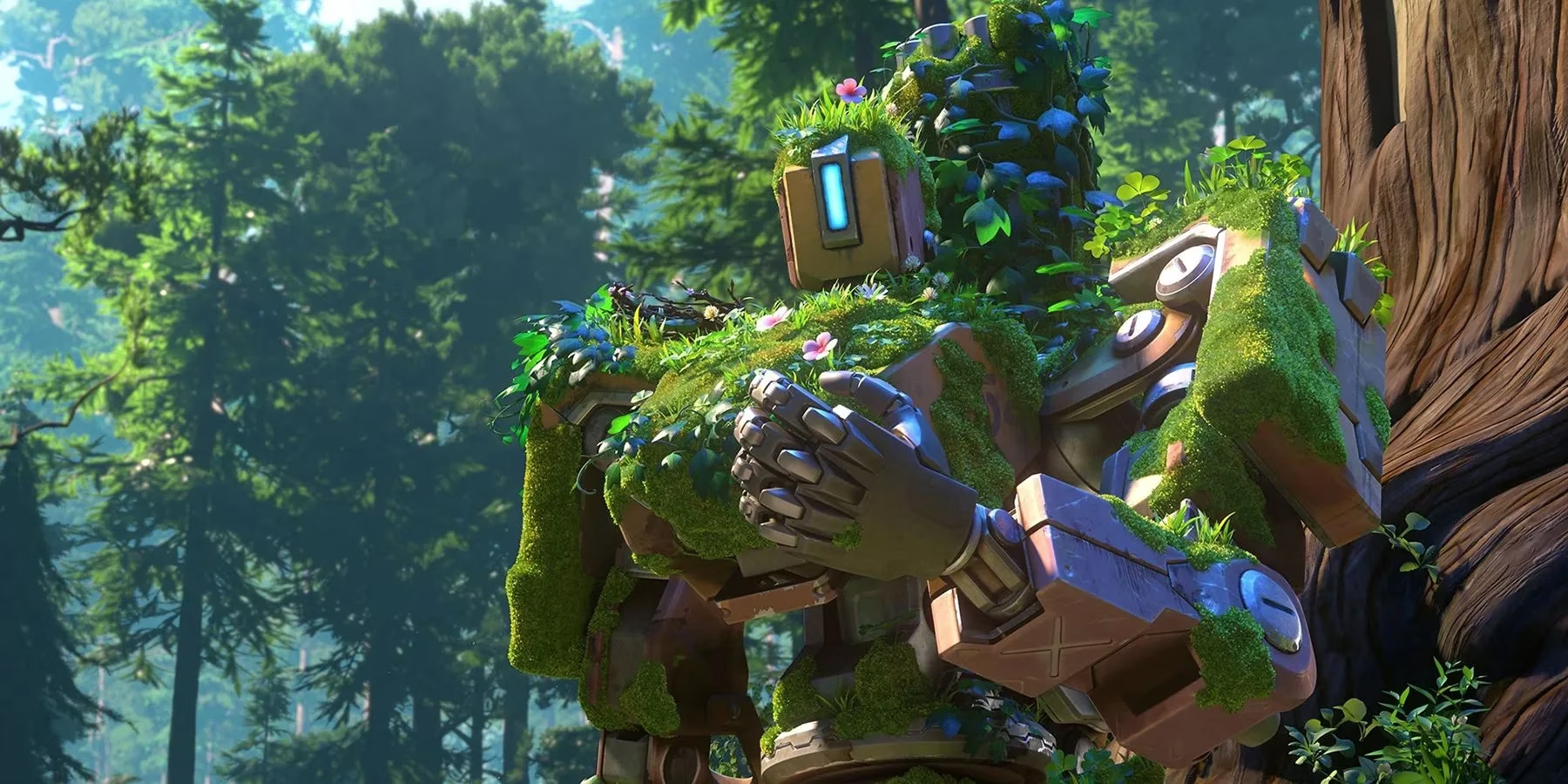
As Overwatch 2 continues its journey into 2026, the game has managed to conquer new frontiers—unfortunately, one of them seems to be the frontier of automated annoyance. While players were hoping for more hero reveals or map overhauls, they got something else entirely: a full-blown robot uprising in their ranked queues. Forget about the Omnic Crisis; the real threat in 2026 is logging into a competitive match only to find your entire team, or the enemy's, is composed of soulless bots that make the training range AI look like Overwatch League MVPs. This isn't the AI revolution gamers signed up for.
The Rise of the Thrower Bots
The phenomenon, which the community has colorfully dubbed "thrower bots," has evolved from a sporadic nuisance into a persistent plague. These digital delinquents don't just appear in casual modes anymore; they've boldly marched into the sacred halls of competitive play. Imagine queuing up, heart pounding with the hope of climbing the ranks, only to watch in despair as your Reinhardt charges off the map on repeat or your Ana stares lovingly at a wall. Reports from players detail entire squads that remain glued to their spawn rooms, performing just enough jittery movements to avoid the AFK timer before gracefully accepting defeat. It's less a game and more a bizarre performance art piece titled "The Devaluation of Your SR."
The problem isn't new—whispers of bot-filled lobbies date back to 2023—but its scale in 2026 is unprecedented. One dedicated (and likely traumatized) player reported a marathon session of six consecutive matches over two hours where every single player, teammate and opponent alike, was a bot. That's not a losing streak; that's a surreal descent into a digital puppet show. The core issues that have long haunted Overwatch 2—opaque matchmaking, cheaters, toxic chat—now have a new, mechanically inept sibling joining the family dysfunction.
Why Are the Bots Here? Follow the Money!
So, what's the point of all this automated tomfoolery? The prevailing theory in the trenches is as old as online gaming itself: a grift. These bots are rarely master-level AI; they're simple scripts tied to newly created, free-to-play accounts. Their mission? To lose, gloriously and repeatedly.
Here’s the shady business model in a nutshell:
-
Create & Farm: A bot network creates thousands of new accounts.
-
Lose to Win: These bots queue for games, accumulate hours of playtime, and inevitably sink to the lowest possible rank (Bronze, we're looking at you).
-
Sell the Smurf: These now "legitimate" low-ranked accounts are sold on gray-market sites to higher-skilled players.
-
Havoc Ensues: These players, now armed with a Bronze account, stomp through lower-ranked lobbies, ruining the experience for legitimate beginners. It's a win for the seller, a (short-term) win for the smurf buyer, and a catastrophic loss for the health of the game's competitive ecosystem.
This practice turns the ladder into a playground for bad actors, exploiting the system for profit while stripping matches of any semblance of fair competition. It's a problem that plagues many popular multiplayer titles, and Overwatch 2, with its free-to-play model, is a particularly fertile ground for such exploitation.
Blizzard's Response: A Game of Whack-a-Mole
As of 2026, Blizzard's official stance on this specific bot-army issue remains... conspicuously quiet. While the company has historically launched massive ban waves targeting traditional cheaters using aimbots or wallhacks—a commendable effort that cleared thousands of offenders from the servers—the response to these simplistic, loss-farming bots has been less visible. Players are left feeling like they're playing a frustrating game of whack-a-mole, reporting obvious bot accounts only to see the problem persist season after season.
The lack of a concrete, communicated strategy to combat this wave has left the community's trust fraying. Players invest time and passion into climbing, only to have their efforts invalidated by matches that were decided before they even began. The competitive integrity that forms the backbone of any ranked mode is under direct assault.
The Ripple Effect on the Player Experience
The impact goes beyond a single lost game. The presence of bots creates a toxic cycle of suspicion and frustration.
-
The Paranoia Factor: Every underperforming teammate is now under the microscope. Is that Genji having a bad day, or is he a sophisticated piece of code with a fondness for diving into 1v5s? The line is blurring.
-
Queue Time Blues: While bots might make for a quick (if unsatisfying) win or loss, they disrupt the normal flow of matchmaking, potentially affecting queue times and match quality for everyone.
-
New Player Nightmare: Imagine being a genuine new player in 2026, finally placed in your first Bronze matches. Instead of learning the game alongside peers, you're either stomped by a smurf on a botted account or stuck in a lobby where nothing makes sense. It's the fastest way to kill a growing player base.
A Glimmer of Hope? What Can Be Done
All is not lost. The community's vocal reports are the first line of defense. While Blizzard's silence is deafening, history shows they do act on widespread issues. Potential solutions, shouted from the forums and subreddits, include:
-
Enhanced Detection: Algorithms that can identify patterns of bot behavior—repetitive movement, consistent non-participation, new accounts with abnormal loss streaks—and flag them for review.
-
Hardware & Phone Number Bans: Going beyond account bans to target the hardware or required phone numbers behind bot farms, making it more costly and difficult to operate.
-
Tighter Ranked Restrictions: Increasing the level or win requirement before allowing access to competitive play, putting a hurdle in front of mass account creation.
As Overwatch 2 sails further into 2026, the bot problem represents a critical test. The game has survived hero controversies, pricing debates, and meta shifts. But the fundamental promise of a fair, competitive shooter is non-negotiable. Players can handle a tough loss to a better team. What they shouldn't have to handle is a loss to a script, or a win that feels empty because the enemy never left spawn. The ball, as they say, is in Blizzard's court. The community is waiting to see if their next move is a tactical shutdown of these bot networks or just another voiceline about "waiting for the payload."