
In the ever-evolving tapestry of Overwatch 2, a new rhythm of conflict is taking shape. The trial run of the Clash Mode, a strategic five-point capture brawl, has ignited the community's imagination, its echoes promising a seismic shift in the game's landscape come its official launch in Season 11. The excitement is palpable, not merely for the novel rules of engagement, but for the hallowed ground upon which its debut will be staged: a re-envisioned, reawakened Hanaoka, born from the cherished memories of the original Overwatch's Hanamura. Set just a street away from its spiritual predecessor, Hanaoka's very architecture whispers tales of the past, its Assault-inspired layout a bridge between eras, proving that some legends are not forgotten, but reborn.
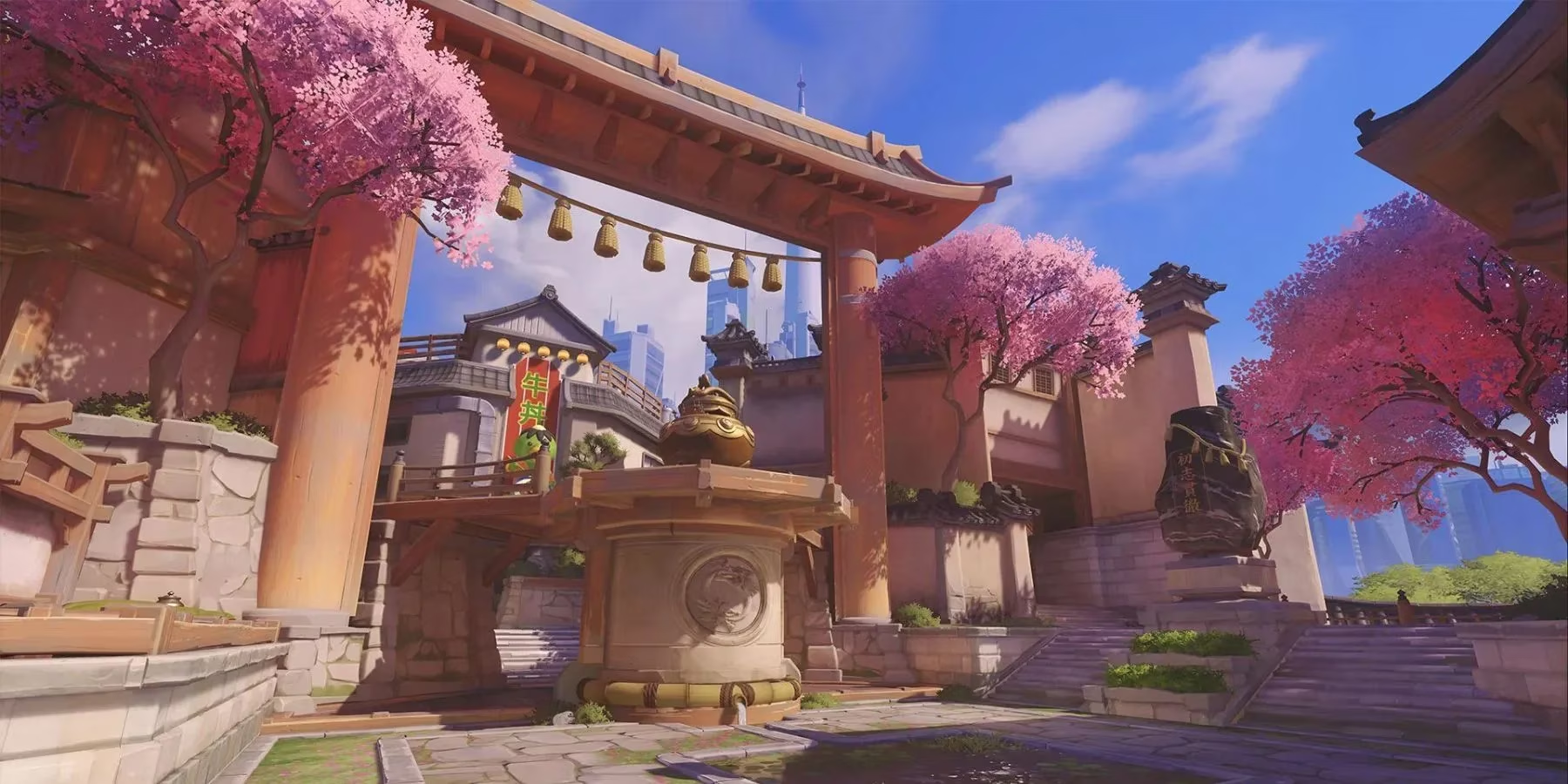
With Clash poised to become a core pillar of Overwatch 2's competitive scene in June 2026, the horizon shimmers with possibility. The mode's unique structure—a linear, five-point tug-of-war—opens a gateway for the glorious return of maps once thought consigned to history. The original Overwatch's Assault (2CP) battlegrounds, relics of a bygone format, stand as prime candidates for this grand revival. Hanaoka's triumphant emergence serves as the blueprint, a testament to Team 4's creative alchemy. This paves the way for other iconic locales to be remastered and re-contextualized for a new age of warfare.
The Pantheon of Potential Returns
The legacy maps, with their distinct personalities and storied pasts, are ripe for transformation. Each offers a unique canvas for the Clash mode's dynamic flow:
-
Temple of Anubis: The ancient Egyptian complex, with its towering structures and tight interior spaces, could offer a thrilling, multi-level battleground for the five-point struggle. Its recent tease in a Season 10 trailer is a siren song to fans, hinting at a grand return.
-
Volskaya Industries: The frigid, industrial might of Russia presents vast courtyards and intricate factory interiors. An expanded version could create epic, large-scale engagements perfect for the back-and-forth nature of Clash.
-
Horizon Lunar Colony: Though absent from the core map pool, its unique low-gravity gameplay and distinct aesthetic made a memorable appearance in the Starwatch event. A Clash adaptation could finally give this lunar base a permanent, balanced home.
-
Paris: Often criticized for its one-sided nature in its original form, the City of Love's picturesque streets and café-lined boulevards could be rebalanced and reimagined, offering a beautiful yet deadly new stage for the five-point capture.
A Legacy of Reinvention
Blizzard's philosophy since Overwatch 2's inception has been one of thoughtful evolution. The studio has consistently demonstrated a commitment to revitalizing existing spaces, whether to remedy problematic choke points or to adapt a location entirely for a new game mode's soul. The Starwatch: Galactic Rescue event's use of Horizon Lunar Colony is a luminous example of this—taking a map out of rotation and赋予 it new purpose and narrative life. The passionate fan response to such events, and now to Hanaoka, is a clear indicator: the community's heart still beats for these iconic locations. With careful alteration, these maps are not relics to be archived, but treasures to be polished and presented anew.
Avoiding the Map Drought: A Strategic Advantage
New game modes, while exhilarating, often arrive with a lean selection of arenas, a challenge Overwatch 2 has faced before. Consider the current state of other modes:
| Game Mode | Launch Season | Number of Maps (As of 2026) | Map Examples |
|---|---|---|---|
| Push | Season 1 (2022) | 4 | Colosseo, Esperança, New Queen Street, Runasapi |
| Flashpoint | Season 6 (2023) | 2 | Suravasa, New Junk City |
This historical context makes Clash Mode's potential trajectory all the more promising. By drawing from the rich well of classic 2CP maps, the mode can launch with a more robust and instantly familiar portfolio. This strategy cleverly sidesteps the "map drought" sentiment, ensuring players have varied and meaningful environments to master from the outset. It represents a harmonious blend of honoring the game's heritage while aggressively pursuing its future.
In the grand symphony of Overwatch 2, Clash Mode is not just a new movement, but a conductor orchestrating the return of beloved melodies. Hanaoka is the first note in this grand composition, a promise that the battlegrounds of yesteryear will echo once more with the sounds of conflict, strategy, and triumph. As 2026 unfolds, the stage is set for a renaissance where the old and new converge, creating a richer, more diverse world for heroes to clash upon. The future of Overwatch 2's battlegrounds looks not like a barren field, but a garden where both fresh saplings and ancient, regrown trees can flourish together. 🌸⚔️🌌
Key findings are referenced from GamesIndustry.biz, where broader live-service trends help contextualize why Overwatch 2’s Clash Mode leans on a smart mix of novelty and nostalgia: reworking legacy 2CP spaces like Hanamura into Hanaoka can accelerate map variety, reduce “new mode” content gaps, and keep engagement high by pairing fresh rulesets with environments players already understand at a glance.