
When Overwatch 2 finally went live, it felt less like the triumphant return of a hero shooter and more like a digital stampede crashing against a shuttered gate. Long queues wrapped around the virtual block, and connection errors popped up like daisies after spring rain. At first, one might assume Blizzard's servers were simply buckling under the weight of millions of players all trying to squeeze through the same doorway at once. But according to Blizzard president Mike Ybarra, the real story was a mass DDoS attack—an intentional flood of junk traffic designed to drown the game's infrastructure. The timing could not have been more brutal, as it turned a hotly anticipated launch into a frustrating waiting room.
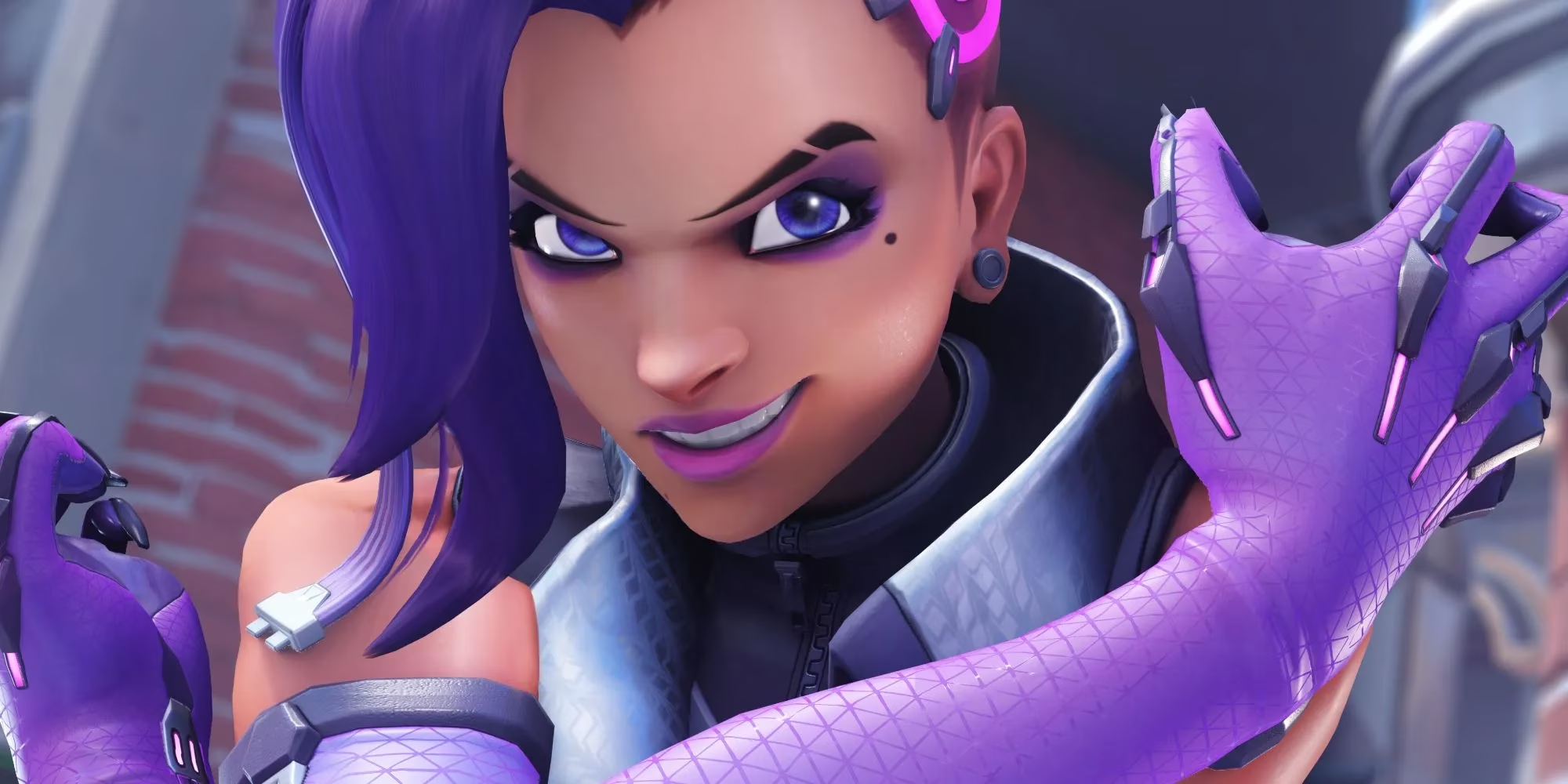
Ybarra took to his personal Twitter account to explain the situation. He wrote that Blizzard was experiencing a mass DDoS attack on its servers and that teams were working hard to mitigate and manage the fallout. The attack caused a significant number of drop and connection issues for players. In other words, it was not simply high demand bending the metal; it was a deliberate siege, like someone pointing a fire hose at a paper umbrella and wondering why everyone underneath gets wet.
The symptoms were hard to miss:
-
🕒 Queue timers that stretched like taffy on a hot sidewalk.
-
⚡ Sudden disconnects that yanked players out of matches mid-fight.
-
👕 Missing skins, items, and currency for returning Overwatch veterans.
A table helps separate typical launch-day congestion from the fingerprints of a DDoS attack:
| Symptom | Normal Launch Congestion | DDoS Attack Signature |
|---|---|---|
| Queue length | Long but often shrinks steadily | Erratic spikes and stalls |
| Connection stability | Occasional lag | Repeated mass disconnects |
| Server response | Slow but recoverable | Complete packet flooding |
The attack likely contributed to several launch problems beyond just waiting in line. One particularly painful issue was the apparent disappearance of skins, items, and in-game currency for players migrating from the original Overwatch. Many longtime fans found their digital wardrobes had vanished like smoke rings in a gale, leaving them locked out of previously purchased cosmetics. Blizzard's account merge system was already under stress from the influx of returning players, and the DDoS assault only made matters worse, like throwing a blanket over a struggling engine.
Despite the chaos, Ybarra's message hinted at a silver lining: the teams at Blizzard were actively working to manage the attack rather than simply waiting for it to pass. They were rerouting traffic, filtering malicious packets, and trying to restore stability—much like air traffic controllers during a lightning storm, guiding planes around a sky that kept cracking open. He did not give a precise fix time, but many players concluded that waiting until the next day might be the smartest move. After all, charging into a DDoS-stricken server is a bit like trying to empty the ocean with a teaspoon; the effort is noble, but the ocean rarely cooperates.
Beyond the server meltdown, Activision Blizzard was dealing with another kind of turbulence. The National Labor Relations Board had found that the company refused to offer pay increases of up to $20 an hour to Raven Software QA testers who were attempting to unionize. That finding gave a slight amount of leverage to workers still negotiating over conditions. While it had nothing to do with Overwatch 2's technical woes, it added another layer of scrutiny to a company already in the spotlight for all the wrong reasons. For players, the contrast was stark: on one screen, a game struggling to stay online; on another, headlines about labor disputes and union drives.
Looking back from 2026, Overwatch 2's launch week remains a useful case study in how a mass DDoS attack can turn a celebration into a slog. Modern online games now routinely build in DDoS mitigation layers and stress-test their login pipelines before a big release. The lessons from that chaotic period—clear communication, robust filtering, and a little patience—still echo through game studios today. And while Overwatch 2 eventually recovered, those first few days served as a reminder that even the mightiest server architecture can be brought low by a determined flood of digital noise.