
Somewhere in the hero shooter hall of fame, Overwatch 2’s launch week sits in a glass case with a tiny note that reads: “Do not try this at home.” 🎮
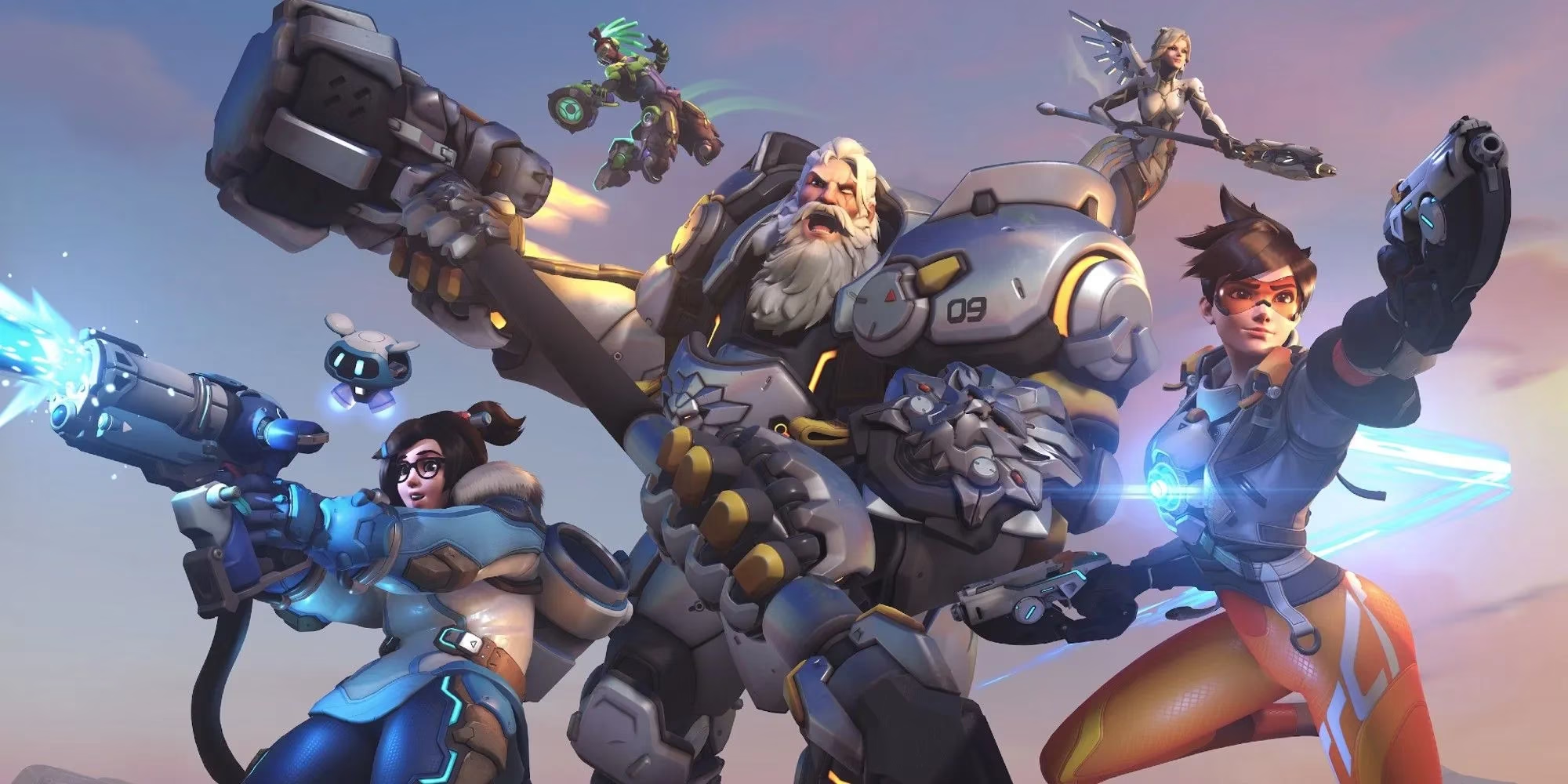
When the sequel landed, the internet had plenty to say, and honestly, most of it was not a love letter. Server queues stretched longer than a DPS main’s wait time, DDoS attacks poked holes in the fun, and some veteran players opened their hero galleries only to find their favorite skins had apparently gone on an unannounced vacation. But here’s the twist: more than 25 million people still showed up during the first ten days. That’s not a small friend group. That’s a small country of Lucio mains, Genji one-tricks, and confused newcomers.
Blizzard, in a statement that practically radiated “please focus on the big number,” confirmed the milestone. The studio said it was thrilled to bring new players into Overwatch’s vibrant universe while welcoming back the existing community. Reading between the lines, it was less “everything is fine” and more “look at this enormous player count while we put out several fires.” The statement also revealed that the sequel’s peak player count hit triple that of the original game. New players apparently outnumbered the old guard, which makes sense when the price tag drops to zero.
A table helps break down the launch math:
| Launch Metric | Number | Vibe Check |
|---|---|---|
| Total players in first 10 days | 25 million+ | Impressive, but chaotic 😅 |
| Peak player count vs. original | Triple | Free-to-play does that ✨ |
| Server queue length | Hours for some | Big yikes 🔥 |
| Compensation offered | Double XP weekends + free legendary | A decent apology skin 🎁 |
Let’s be real: comparing peak numbers to the original Overwatch was a little cheeky. The first game required an upfront purchase, while the sequel walked in wearing the free-to-play badge. Of course the peak count tripled. It’s like comparing a paid concert to a free street festival and acting surprised when more people show up to the free one. But the crowd didn’t exactly arrive to a smooth experience. The servers were practically on life support. Blizzard seemingly underestimated how many people would rush in, and the queue times made some players wonder if they had accidentally signed up for a government office appointment simulator.
DDoS attacks added another layer of “not today, please.” Meanwhile, long-time players discovered that some cosmetics had not migrated properly. Few things unite a community faster than the shared horror of missing a rare skin that took dozens of loot boxes to earn in the old days.
To calm the storm, Blizzard promised double XP weekends and a free legendary item. It was a nice gesture, though some players still side-eyed the launch like a healer watching a tank overextend. The apology legendary was less “we fixed everything” and more “please accept this shiny object while we reboot the servers.”
Beyond the matchmaking chaos, Activision Blizzard continued to face investigations and lawsuits tied to allegations of a toxic workplace culture. A fresh sexual harassment lawsuit landed just days before the launch glow could settle. That made the celebratory tone feel a bit like throwing a birthday party while the kitchen was still on fire. The huge player numbers were real, but so were the unresolved problems behind the scenes.
In hindsight, Overwatch 2’s first two weeks were a masterclass in mixed messaging: huge numbers, loud complaints, extended queues, and a corporation trying to keep its balance on a very wobbly payload. The player count was real, but so were the growing pains. And somewhere between the server errors and the free legendary, the sequel learned a lesson every live-service game eventually memorizes: a big launch is not the same as a stable one. By 2026 standards, the live-service landscape has only gotten busier, but that early Overwatch 2 stumble still works as a cautionary tale for any studio reaching for the launch-day confetti.