
Looking back from 2026, I can still vividly recall the moment Overwatch 2 felt truly cohesive for the first time. As a player who has been on this ride since the original 2016 launch, every major patch left a distinct fingerprint on my memory. But none quite like the third season of Overwatch 2, which kicked off in February 2023. According to game director Aaron Keller at the time, the roster had reached a balance pinnacle that hadn’t been seen since the game’s launch the previous October. That statement wasn’t just developer hype—it lined up with what I and many others were experiencing in our matches.
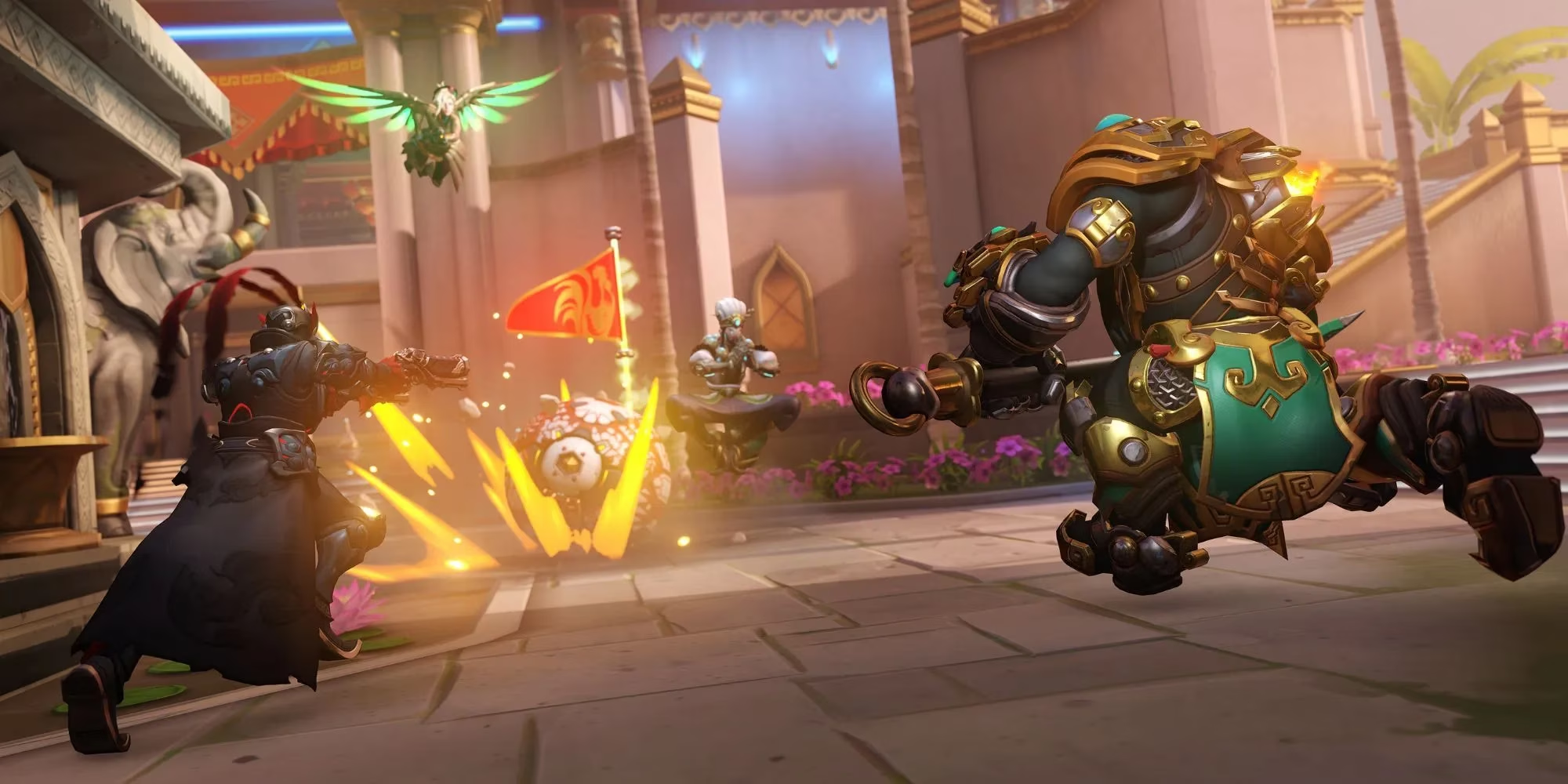
Season 3 introduced a flurry of adjustments that reshaped the hero landscape. Big buffs and brutal nerfs landed all at once, and somehow the win rates for a large chunk of the cast converged around the elusive 50 percent mark. This wasn’t just a cosmetic fix; it meant that games no longer felt predetermined in the spawn room. I could pick a hero that suited my mood or the map, and know it had a fighting chance. The support role, in particular, underwent a quiet revolution.
Keller highlighted that “most supports [were] viable in nearly every skill tier.” As someone who often flexes to fill the support slot, this was a breath of fresh air. Before Season 3, picking certain healers in higher ranks felt like throwing the game. But the tide had turned. A huge Mercy nerf had top-tier support mains experimenting more, and suddenly Brigitte rose from obscurity. Her win rate climbed to around 50.8 percent, a figure she hadn’t touched in ages. I found myself rallying teams with her Repair Packs and well-timed Shield Bashes, especially on control maps where aggressive positioning paid off. The emotional shift was real—teammates stopped sighing when they saw a Brig on their side, and I actually felt like a protector again.
The tank roster also entered what I’d call a golden age. Keller said it was “almost hard to pick a bad tank,” and my own experiences backed that up. Even Roadhog, who had gone through periods of irrelevance, found his place. But the star of the show, to everyone’s surprise, was Wrecking Ball. The hamster had been a meme pick for so long that my duo partner and I used to dread the moment he’d lock it in. Yet in Season 3, Ball’s buffs made him a menace. Keller noted his win rate rivaled Reinhardt’s, and in the Top 500, he actually became the most selected tank. I’ll never forget a particular King’s Row game where my duo grappled through the arch, slammed the enemy backline, and we rolled them in less than a minute. The disbelief in chat was delicious.
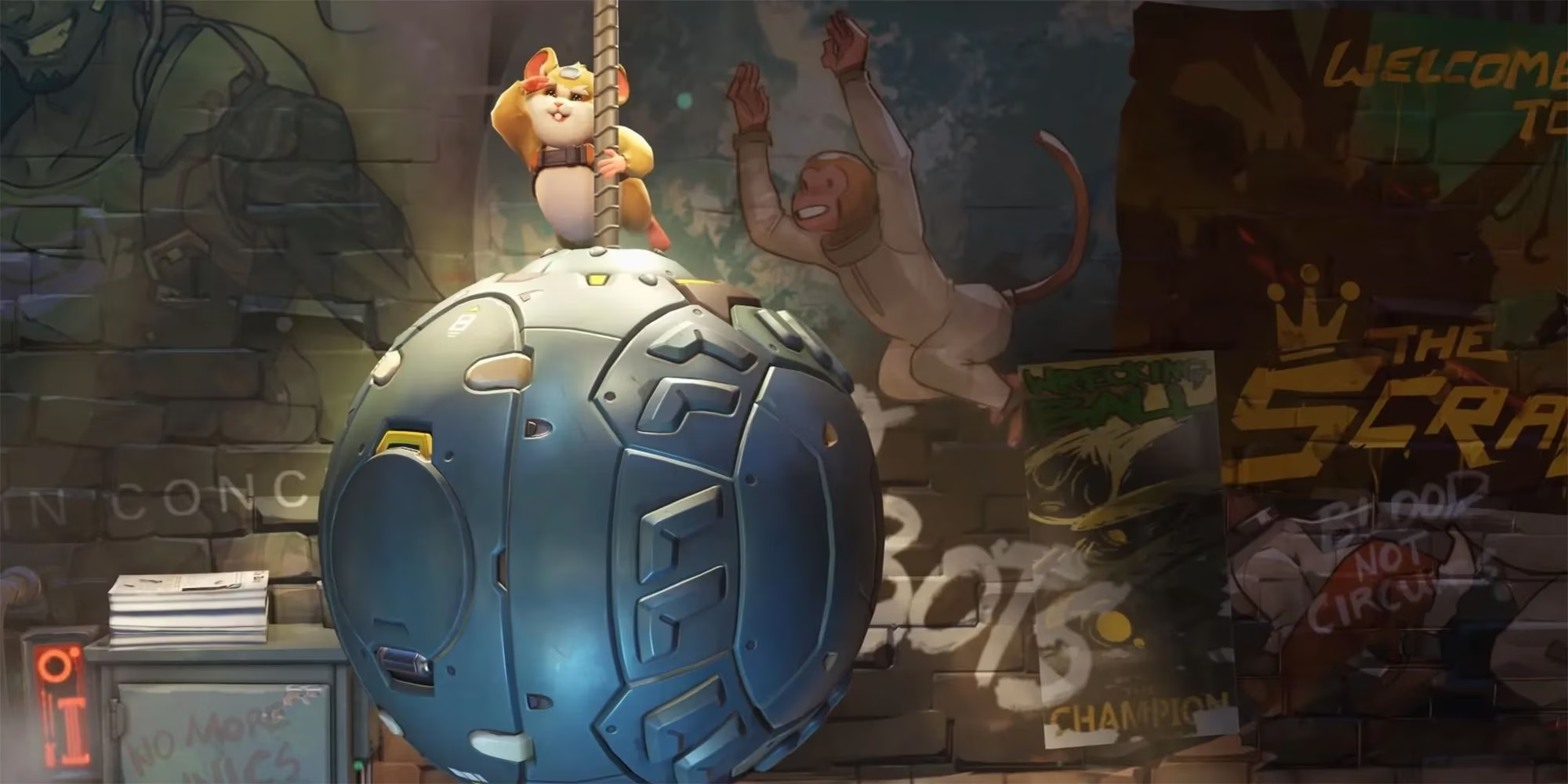
With Ball, the key was that his newfound viability wasn’t oppressive. He still required skill and map knowledge, which rewarded dedicated players without breaking the competitive ladder. Tanks in general felt sturdy but not invincible, a sweet spot that Overwatch 2 had struggled to find since removing the off-tank. By mid-2023, I had built a respectable hero pool across all three roles, and Season 3 was the first time I felt equally confident flexing between them.
DPS balance was a slightly different story. Keller described the role as “fairly” balanced, which I took to mean “mostly fine, with a few outliers.” Hitscan heroes like Cassidy, Pharah (despite not being hitscan, she was lumped into the dominant group), and Widowmaker were performing better than others. However, the development team wasn’t in a hurry to intervene. They announced no major DPS changes would arrive until the midseason patch, a decision that sparked heated debates on forums. Personally, I hated facing a pocketed Pharah on Junkertown, but I understood the logic—rushing balancing can sometimes make things worse. The meta became more about playing around those strong picks, which taught me the value of counter-swapping more than any tutorial ever could.
While the hero balance sparkled, matchmaking remained a sore spot. The community had been vocal for weeks, and Season 3 didn’t silence the complaints. Keller claimed in a blog post that match quality had “risen across the board.” Yet many of us saw evidence to the contrary. I vividly remember a streak where my silver-ranked friends and I were placed against a trio of Diamond players, leading to absolute slaughter. We weren’t alone; the subreddit overflowed with screenshots of ludicrous rank disparities. In hindsight, that friction might have spurred later improvements—today, in 2026, matchmaking feels significantly more refined, though it’s still far from perfect. The Season 3 turmoil was a necessary growing pain.
From my current vantage point, Season 3 stands as a blueprint for how to handle a live service shooter. Its focus on making every role feel impactful created a trickle-down effect we still enjoy. 🌟 Support viability encouraged more players to flex, reducing queue times. 🛡️ Tank stability meant fewer one-sided stomps. ⚔️ DPS variety, though unbalanced at the top end, still allowed creativity. The developers learned that bold changes (like the Mercy rework) didn’t destroy the game; they revitalized it. I often think back to that era when discussing with newer players how Overwatch 2 evolved into the strategic masterpiece it is today.
Of course, 2026 brings its own meta shifts, new heroes, and maps I could only dream of back then. Yet whenever I scroll through old patch notes, Season 3’s list feels like a nostalgia bomb. It was a moment where the stars—or rather, the win rates—aligned. And as a player who lived through it, I can say with certainty: Aaron Keller wasn’t just delivering corporate optimism. That season, for a brief, shining window, Overwatch 2 truly found its balance.
The following table captures some of the approximate win rates I tracked during that period, based on community data and developer insights. It’s a snapshot of why the season felt so harmonious.
| Role | Hero | Approx. Win Rate |
|---|---|---|
| Support | Mercy | 49.5% |
| Support | Brigitte | 50.8% |
| Tank | Reinhardt | 50.2% |
| Tank | Wrecking Ball | 50.0% |
| DPS | Cassidy | 51.1% |
| DPS | Pharah | 50.9% |
Those numbers might look minor, but they collectively tell a story of diversity and fairness. It was proof that a game with over 30 heroes could feel like a complete ecosystem rather than a set of rigid tiers. In my long gaming career, I’ve rarely encountered such a well-rounded patch, and that’s why I still hold Season 3 up as the gold standard. Whether you were a Brazilian wrecking machine or a stoic German crusader, there was a place for you. And that, to me, is what Overwatch was always supposed to be.