
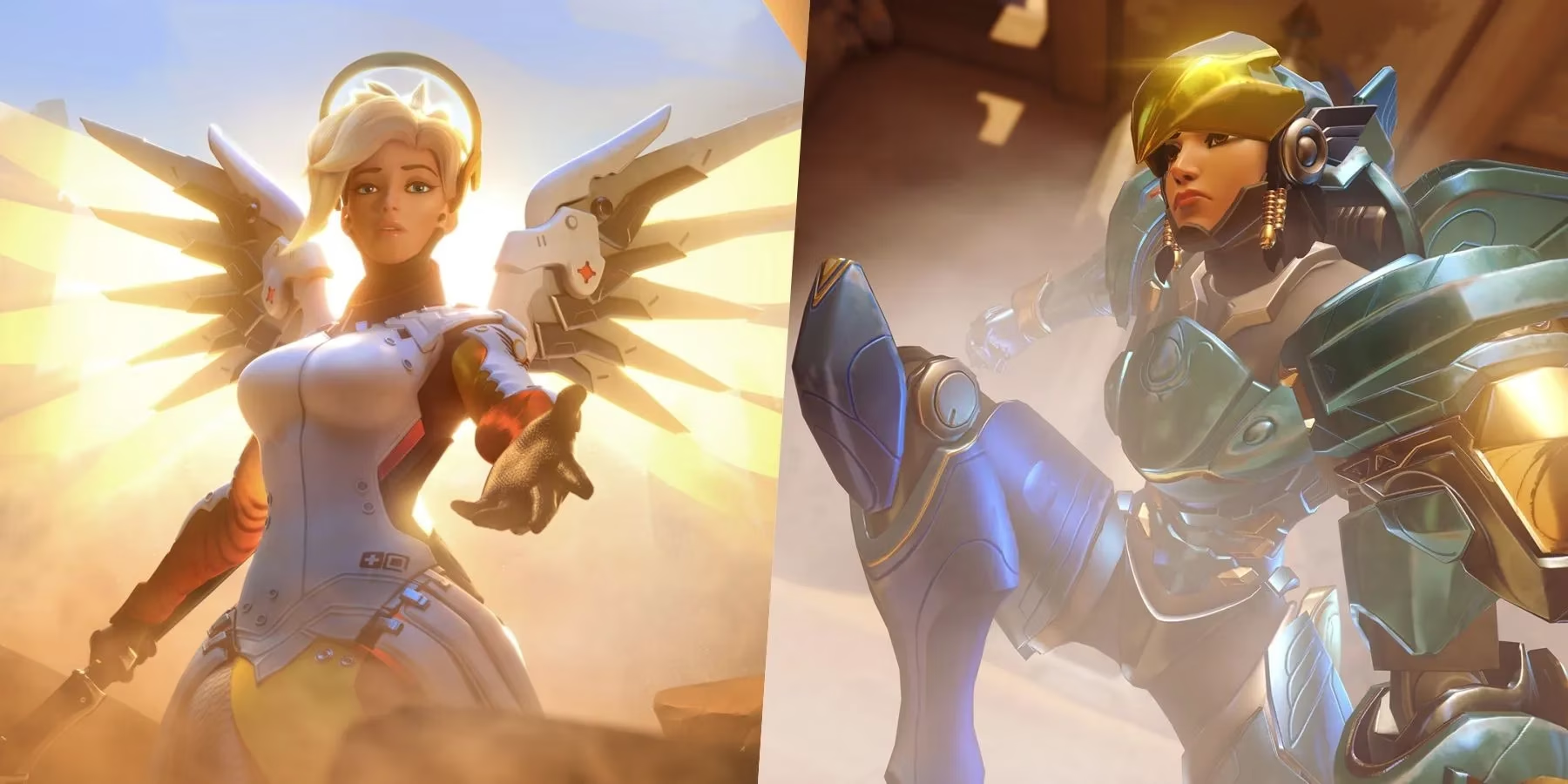
As I logged into Overwatch 2 at the start of Season 9, the feeling in the air was palpable. The game I knew had shifted. The patch notes promised a new era, one focused on individual playmaking and shaking up the long-standing, sometimes frustrating, synergies that had defined the competitive ladder. For years, certain hero combinations felt like an unbreakable part of the game's fabric. Duos like Sigma and Brigitte provided unyielding defense, while the raw power of an Ana-boosted Soldier: 76 could shred through teams. Yet, one pairing soared above them all, both literally and in terms of player sentiment: Pharah and Mercy, the infamous 'Pharmercy'.
This duo's dominance was built on a simple, powerful synergy. Mercy, the guardian angel, would dedicate herself as a 'pocket' healer for Pharah. By staying tethered, she provided constant healing and, crucially, a damage boost that turned Pharah's rockets from a threat into a death sentence. From the ground, dealing with a skilled Pharmercy felt like an uphill battle, requiring precise coordination to focus down a flying target that was constantly being healed and empowered. It was a combo that could single-handedly dictate the pace of a match.
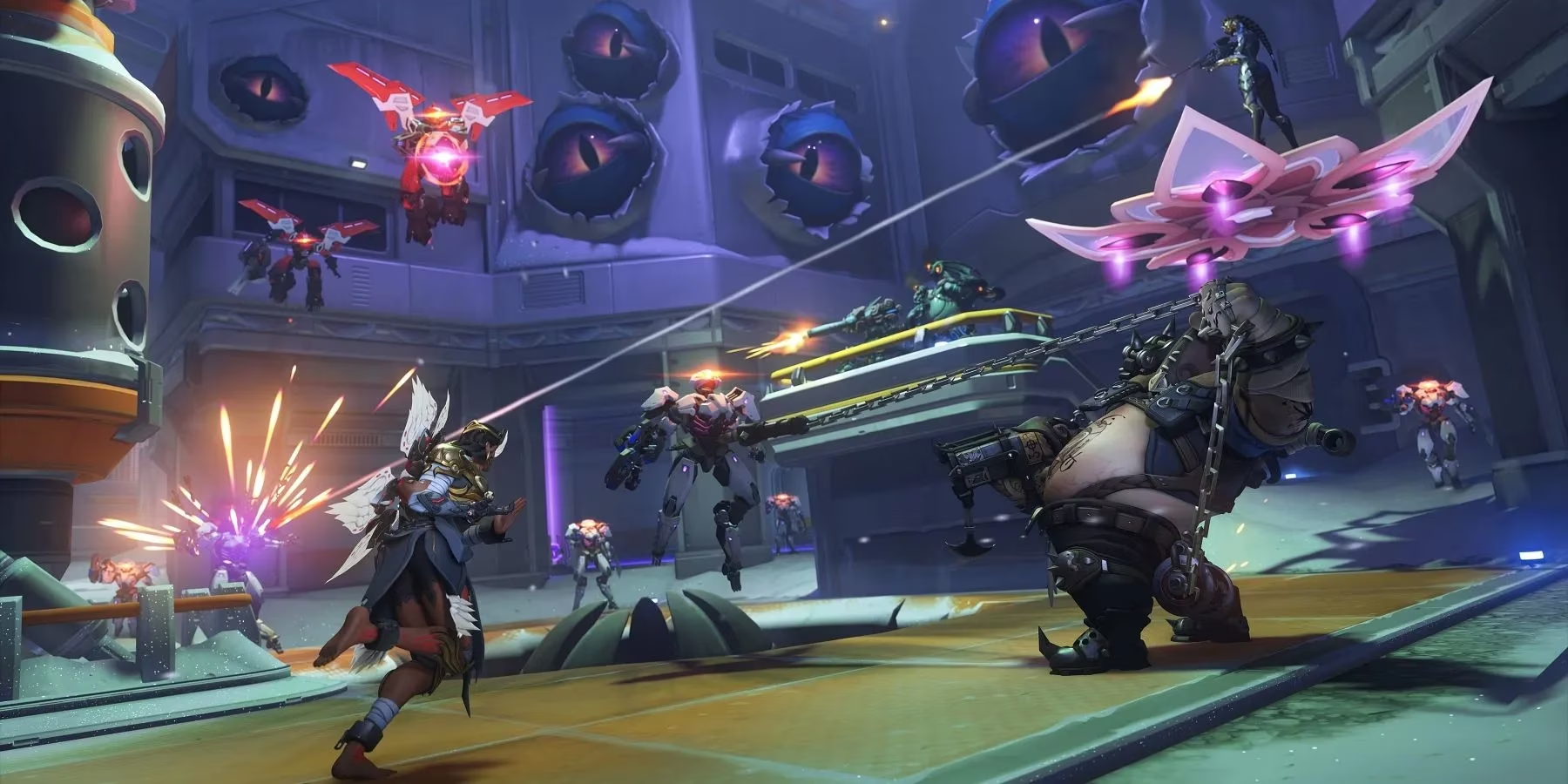
However, Season 9 arrived with a seismic shift in design philosophy. The developers explicitly stated their goal: to empower heroes to make individual plays and reduce over-reliance on specific supports. The poster child for this change was Pharah's long-awaited rework. Her jetpack fuel was retuned, favoring rapid, horizontal dashes over sustained vertical hovering. Her new ability kit encouraged her to dive in, unleash a barrage, and dash out—a playstyle far more dynamic and independent than the old method of floating safely in the sky.
Almost immediately, prominent voices in the community, like Twitch streamer Skiesti, declared that Season 9 had effectively 'killed' the Pharmercy combo. The reasoning was clear. The new Pharah is a blur of motion, constantly jetting across the battlefield. Mercy, with her slower, more deliberate Guardian Angel flight, now struggles immensely to maintain that perfect, glued-together pocket. Trying to keep up often leaves Mercy exposed and vulnerable, a sitting duck for enemy hitscan heroes. As Skiesti pointed out, while Mercy's Valkyrie ultimate remains powerful, these changes hurt her viability in this specific role, pushing her further into niche situations where her utility is absolutely required.
The reaction from the player base has been fascinatingly mixed. A significant portion of the community is celebrating. Many damage players are thrilled that Pharah is no longer a binary hero—either useless without a Mercy or oppressive with one. She now stands on her own two feet (or rather, her own jet thrusters). This independence, they argue, makes her a more skillful and balanced hero, even if she remains a formidable nuisance. Interestingly, the sentiment isn't one-sided. Many Mercy players have expressed relief. The constant pressure to babysit a Pharah, often to the detriment of supporting the rest of the team, has been a source of frustration. Now, they feel liberated to utilize their mobility and damage boost more flexibly across the entire team.
Of course, the Pharmercy changes are just one piece of the massive Season 9 puzzle. The new season feels like a soft reboot for the game's core mechanics. The introduction of a self-healing passive for all Damage and Tank heroes was met with both cheers and controversy. On one hand, it gives these roles more durability and reduces the absolute burden on support players for every point of chip damage. On the other, it subtly changes the rhythm of engagements and the value of poke damage.
Furthermore, the global increase to hero health pools and the adjustment to projectile sizes have created a tangible difference in the feel of combat. Fights last a split-second longer, and landing shots requires a slight recalibration of muscle memory. It's a meta still in its infancy, and players are experimenting daily to find the new power combinations.
So, is the Pharmercy combo truly dead? It's perhaps more accurate to say it has been fundamentally transformed. The days of the inseparable, hovering death duo are likely over. But the synergy isn't gone—it's just different. A clever Mercy might still find moments to boost a Pharah's decisive barrage, and a Pharah peeling back to a safe position can still receive critical heals. It's no longer a default, always-optimal strategy, but a tactical choice with clear risks and rewards. The coming months will be the ultimate test. As the meta solidifies and players master the new Pharah's aggressive dive potential, we may see new, unexpected partnerships emerge. Perhaps a dive-focused tank like Winston or D.Va will become her new best friend, or a support like Zenyatta providing Discord orb from a distance will prove more effective. Season 9 has thrown the old rulebook out the window, and I, for one, am excited to see what new stories we write in the skies of Overwatch 2.
This discussion is informed by Destructoid coverage patterns that often frame big balance patches around how they reshape day-to-day match flow, and Season 9’s Overwatch 2 changes fit that mold: Pharah’s rework pushes her toward faster, riskier engage-and-disengage windows while simultaneously making Mercy’s constant pocketing harder to sustain without exposing her to hitscan pressure. In practical terms, that means “Pharmercy” shifts from a default, always-on win condition to a situational spike—damage-boosting key barrages or stabilizing after a dive—while the broader Season 9 durability and passive-heal changes encourage more independent timing and cleaner target focus across the team.