
In a move that could fundamentally change how the popular hero shooter addresses its players' most pressing concerns, Overwatch 2 has quietly deployed a piece of new technology with a seemingly small change. The game's recent hotfix to Sombra's Translocator, shaving a second off its cooldown, wasn't just another balance tweak—it was the debut test of the "Rapid Balance Update" system. This tech promises a future where the game can make surgical adjustments on the fly, potentially ending the weeks-long waits for balance changes that have often left the community feeling, well, a bit stuck.
The Tech Behind the Tweak
Traditionally, Overwatch 2 has operated on a schedule of major seasonal updates and mid-season patches. While emergency hotfixes for game-breaking bugs have been possible, targeted balance changes for heroes have largely been confined to these scheduled updates. This new Rapid Balance Update technology aims to break that mold. According to lead gameplay engineer Daniel Razza, the system allowed the development team to push the Sombra adjustment with an exceptionally small patch footprint. Blizzard is now closely monitoring the performance of this technology, exploring how it can be used to enrich the Overwatch 2 experience moving forward into 2026 and beyond.
For a live-service PvP game like Overwatch 2, hero balance isn't just a feature—it's the lifeblood of the experience. An overpowered hero can dominate the competitive ladder for weeks, turning matches into frustrating slogs. Conversely, an underpowered hero can feel like a liability, gathering virtual dust in players' rosters. This new tech represents a potential paradigm shift. Imagine a world where a hero proving too dominant or too weak doesn't have to wait for the next big patch cycle for a correction. It's a future many players have been dreaming about.
Sombra: The Perpetual Puzzle
The choice of Sombra as the test subject for this technology is telling. The hacker hero has been, let's be honest, a bit of a rollercoaster for the balance team. Her latest major rework in Season 13: Spellbinder fundamentally changed her role. By tying her Stealth passive directly to her Translocator (which saw its cooldown increased from 5 to 7 seconds), Blizzard shifted her from a stealthy, backline disruptor to more of a frontline pressure agent. This change removed some of the unique, sneaky gameplay that made her a fan favorite, leaving many Sombra mains feeling a bit lost.
The recent hotfix, reducing the Translocator cooldown from 7 seconds to 6, is a direct response to the drawbacks of that rework. However, few in the community expect this single-second adjustment to solve all of Sombra's new identity issues. She has historically swung between extremes—utterly oppressive or frustratingly weak. This micro-adjustment is a classic example of the kind of fine-tuning the new tech enables: a small, data-driven nudge rather than a sweeping overhaul.
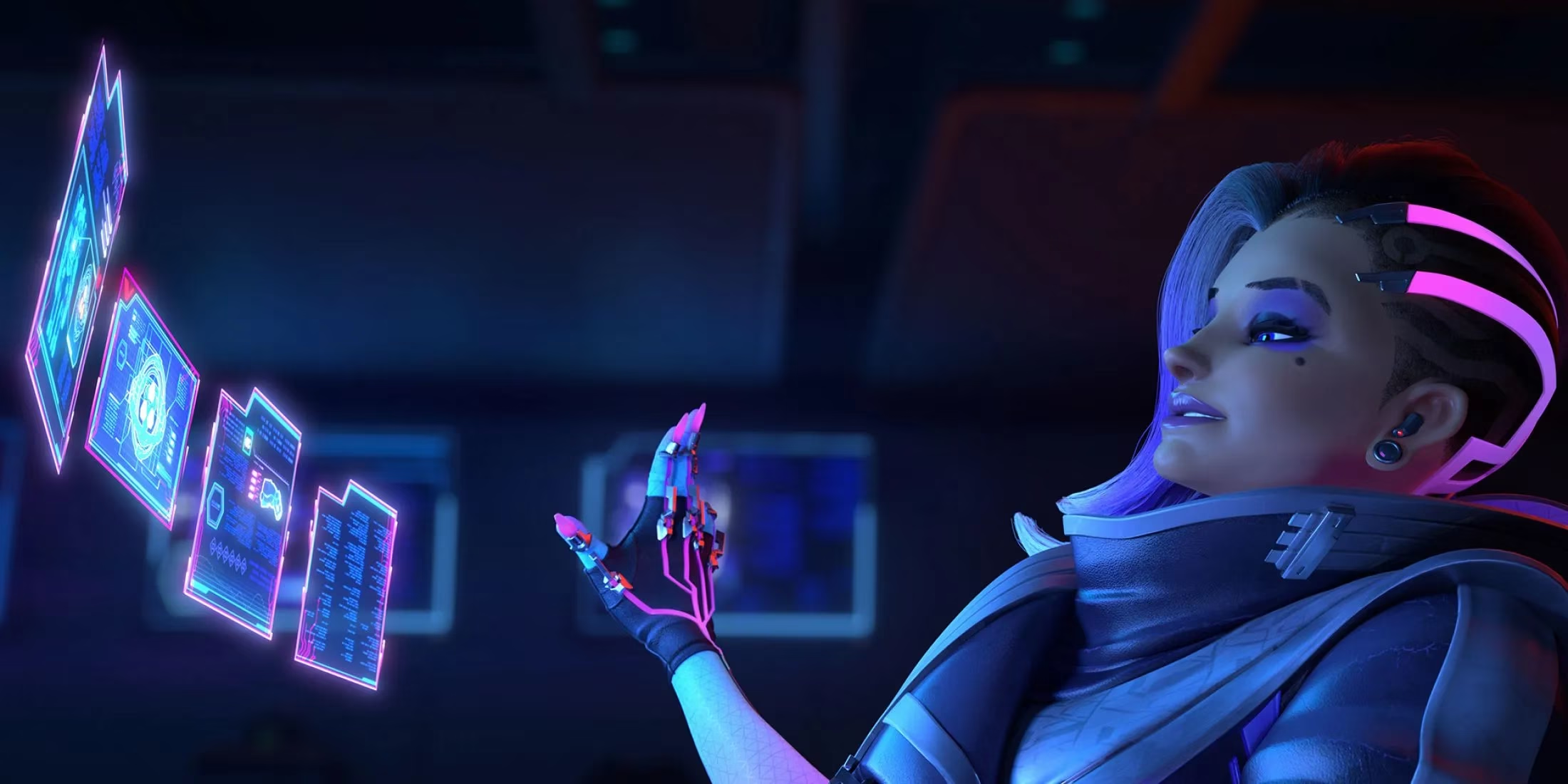
Sombra's Translocator received a one-second cooldown reduction via the new Rapid Balance Update system.
What This Means for the Future of Overwatch 2
The implications of successful Rapid Balance Update tech are massive. Here’s a quick look at the potential benefits:
-
Faster Response Times: No more waiting weeks for a meta-defining hero to be adjusted.
-
Micro-Adjustments: The ability to tweak numbers like cooldowns, damage values, or health pools in tiny increments to find the perfect balance.
-
Healthier Metagame: A constantly evolving competitive scene that doesn't get stale between major patches.
-
Increased Player Agency: Developers can react more directly to community feedback and in-game data trends.
Of course, with great power comes great responsibility. The community has expressed cautious optimism. The fear of over-correction or too-frequent changes creating instability is real. Players need time to learn and adapt to changes, and a meta that shifts daily could be as frustrating as one that never changes. Blizzard's challenge will be finding the right rhythm—using this tool for precise, necessary adjustments without making the game feel unpredictable or chaotic.
| Aspect | Old System | New Rapid Balance Tech |
|---|---|---|
| Update Frequency | Scheduled (Major & Mid-Season) | Potentially Anytime |
| Patch Size | Typically Larger | Can Be Exceptionally Small |
| Change Scope | Often Broad Reworks or Buffs/Nerfs | Enables Micro-Adjustments |
| Goal | Major Meta Shifts | Fine-Tuning and Rapid Response |
The Community's Wait-and-See Approach
The initial reaction has been a mix of hope and skepticism. On one hand, the promise of a more responsive game is incredibly appealing. On the other, Sombra's journey is a reminder that balance is complex. A one-second cooldown change is a start, but her core gameplay loop has been altered. It’s like giving a different tool to a master craftsman and then just sharpening it a little—helpful, but maybe not the whole solution. Only time will tell what's next for the resident hacker and for this promising new technology.
As 2026 progresses, all eyes will be on how Blizzard chooses to wield this new capability. Will it be reserved for critical, obvious imbalances? Or will it usher in an era of constant, fluid evolution for the hero roster? One thing is clear: the days of simply enduring a broken meta for weeks on end might finally be numbered. The future of Overwatch 2 balance is looking faster, smarter, and more agile. The game itself is learning to adapt in real-time, and that's a change everyone can get behind.