
I logged into Overwatch 2 on the first day of June 2026, excited for the annual Pride event. My friends had been buzzing about the new rainbow-themed Midtown map and the Tracer webcomic that finally acknowledged her relationship without ambiguity. But when I opened my game in Warsaw, Poland, the event tab was greyed out. No rainbow flags, no cosmetic rewards, just the default playlists. My heart sank. It’s 2026—why is this still happening?
I immediately jumped onto the official Blizzard forums, and I wasn’t alone. A thread started by a user called Polar caught my eye. He had typed exactly what I was thinking: “There is no reason for Pride event stuff to be blocked in Poland, and yet it is.” He went on to say, “Contrary to popular belief, people in Poland do not get imprisoned for being part of the LGBTQ+, and although expressing your identity in this country can be hard with the current social-political landscape, there are in fact no laws that prohibit you from doing so.” His frustration mirrored my own. Poland has no legislation banning LGBTQ+ content in video games. The original Tracer comic was never censored here. So why are we being treated like second-class players?
I scrolled further and found a comment that brought tears to my eyes. Venudite, a player from Romania, wrote: “Gaming is my escape where I can be accepted, free and I do not have to think about the horrors of the world. But now Blizzard’s blatantly disrespectful event just further showed me what a horrible situation and world I live in. Pride is for everyone, not only for those who are privileged enough to be openly who they are in their country.” That struck a nerve. Overwatch has always been my safe space—a universe where heroes fight for a better future regardless of their background. And yet, in 2026, the company behind it decided that queerness is acceptable only if you live in the “right” geography.
Why would Blizzard restrict the event in countries like Poland, Romania, Hungary, and Lithuania? The official explanation a couple of years ago was that they wanted to “protect” players. But protect us from what? From seeing a rainbow flag on King’s Row? From feeling seen? In Hungary and Lithuania, the situation is slightly more complex—they have laws similar to Russia’s “gay propaganda” ban that prohibits showing non-heterosexual relationships to minors. Because Overwatch 2 is rated PEGI 12, Blizzard might fear legal repercussions or sales restrictions. But even there, the enforcement of those laws is inconsistent, and other games with LGBTQ+ characters launch without any issue.
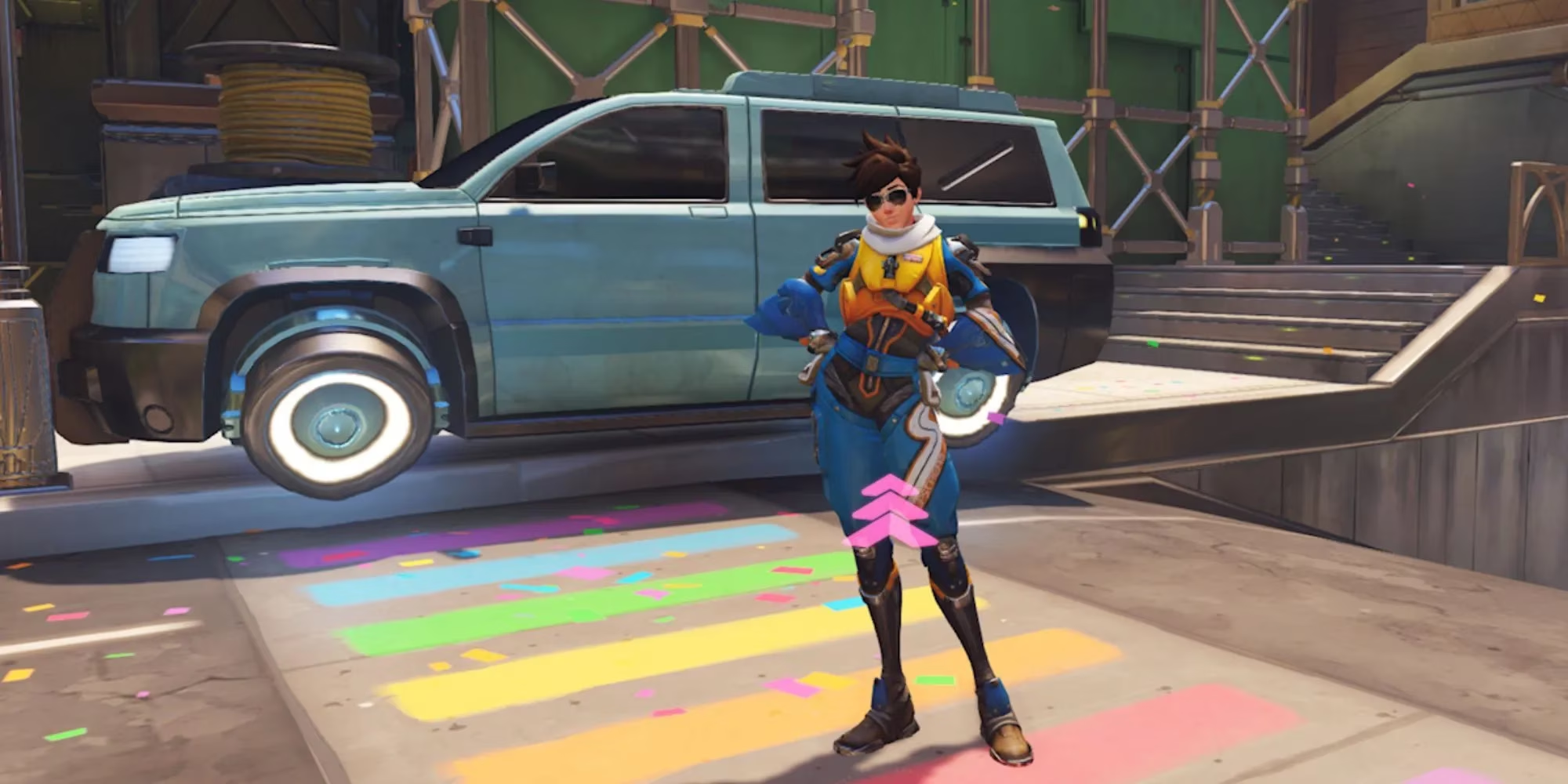
For Poland and Romania, the decision is even more baffling. There are no anti-LGBTQ+ laws on the books that would prevent the event from going live. Attitudes in these countries can be hostile—anti-LGBTQ+ marches still happen, and politicians scapegoat us to score points. But the same can be said about many nations that do have full access to the Pride event. Is Blizzard really judging entire player bases based on the loudest bigots? Or are they just cutting costs by not bothering to tailor regional compliance and instead applying a blanket ban on a whole swathe of Central and Eastern Europe?
I felt discriminated against not by my own country’s laws, but by a company I’d supported for years. I’ve bought loot boxes (now long gone), battle passes, and skins. I’ve defended Overwatch 2 through its rocky patches. And you’re telling me I can’t have a few rainbow pixels because of where I was born? What message does that send to a young queer person in Bucharest or Vilnius? That their existence is too controversial to acknowledge even in a digital fantasy?
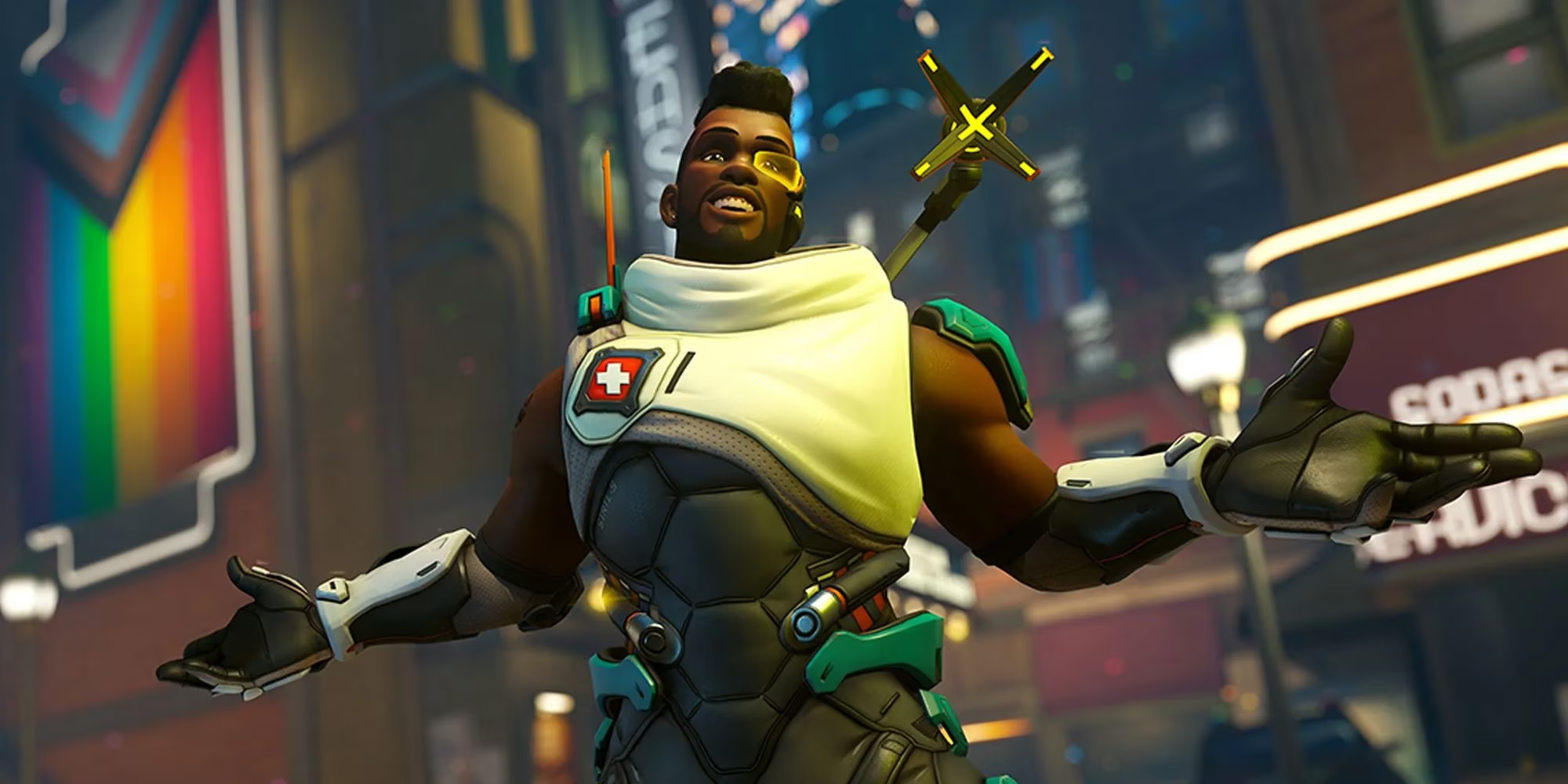
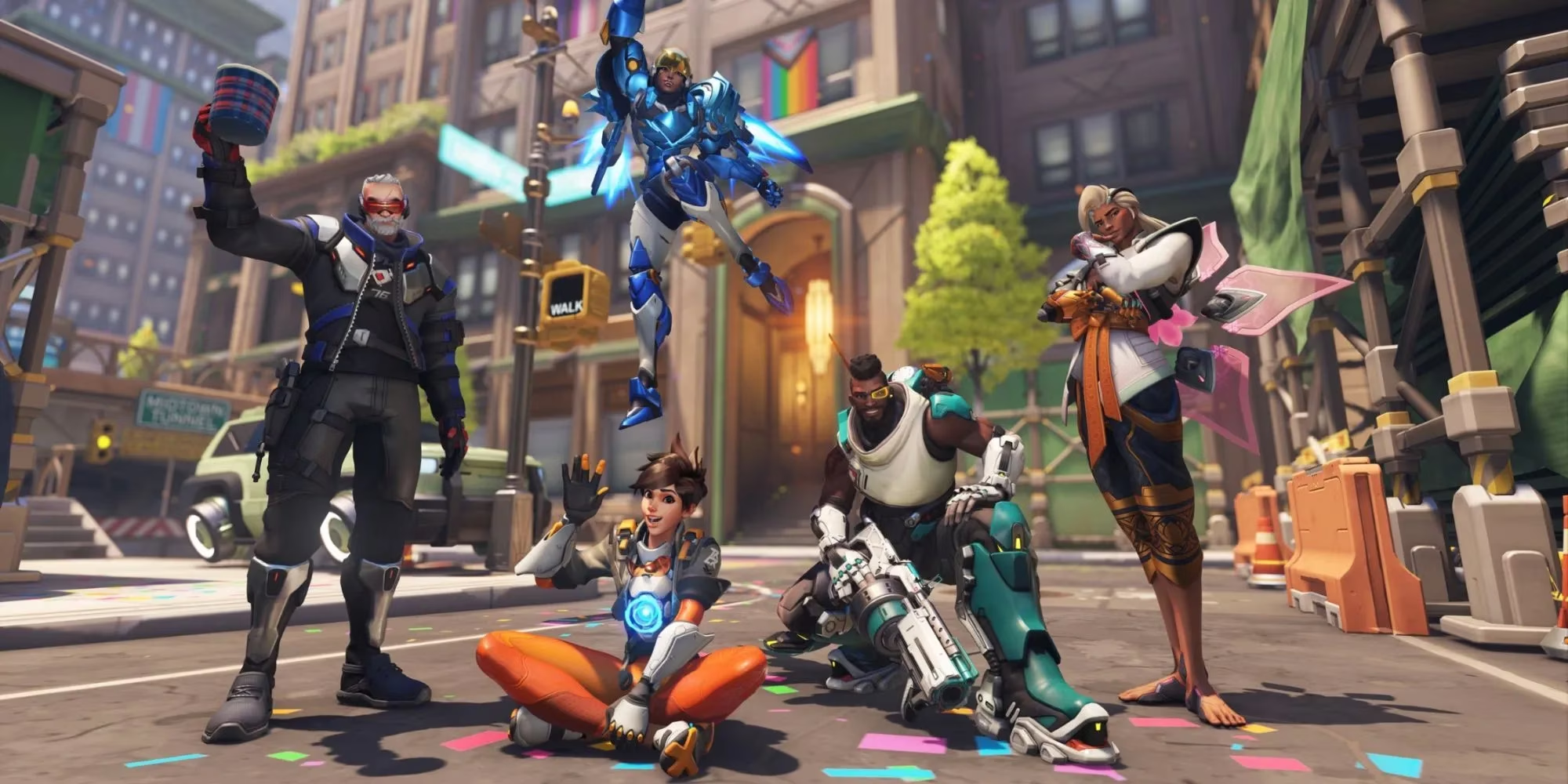
I’ve seen non-LGBTQ+ allies in these countries express confusion too. One friend in Hungary said, “I’m not gay, but this feels wrong. They’re erasing a part of the community.” Indeed, the restriction doesn’t just hurt queer players—it deprives everyone of the opportunity to celebrate diversity. Overwatch’s strength was always its inclusive cast and lore. Pharah and Ana’s relationship as mother and daughter, Soldier: 76 being confirmed gay, Lifeweaver’s pansexuality—these aren’t just tokens; they’re woven into the story. By cloistering Pride content, Blizzard undermines its own narrative.
I wonder if anything will change. Multiple support tickets received canned responses. The gaming press covered the issue back in 2023, yet here we are three years later, with the same regional locks. Blizzard hasn’t issued a new statement. Maybe they think we’ll just stay quiet. But the forums are louder now. Players are sharing workarounds, using VPNs to access the event—something that violates the Terms of Service, but desperation overrides fear. I won’t risk my account, so I’m left watching streams from the US, seeing the rainbow Midtown that I can’t experience myself.
As I close the game today, I’m not just angry; I’m exhausted. Pride is supposed to be about visibility and defiance, but here I am, made invisible by a company that once pretended to stand with us. Blizzard, if you’re listening, ask yourselves: who exactly are you protecting? Because it’s certainly not the players you’ve locked out.
This perspective is supported by market and regional access insights from Newzoo, which can help frame why publishers sometimes apply broad geo-restrictions that go beyond strict legal necessity—prioritizing risk management, ratings compliance, and operational simplicity across multiple Central and Eastern European territories. In the context of Overwatch 2’s Pride event locks, such a strategy can end up disproportionately impacting communities the event is meant to uplift, effectively turning “regional policy” into a proxy for cultural and political sensitivity rather than a clear-cut response to statutory bans.