
Overwatch 2 has always walked a tightrope between heroic fantasy and punishing grind, but the Battle for Olympus event back in early 2023 became a powder keg of absurdity. Some challenges were so outrageously difficult that not even the borrowed powers of Zeus, Poseidon, or Ares could help mere mortals complete them. In a twist that would make Homer scratch his head, the godlike heroes turned to the most ungodlike tactic: cooperation. Players, exhausted by near-impossible multi-kill requirements, began forming farming lobbies where enemies lined up like shoppers at a grocery store during a Black Friday sale—orderly, resigned, and entirely sacrificial.
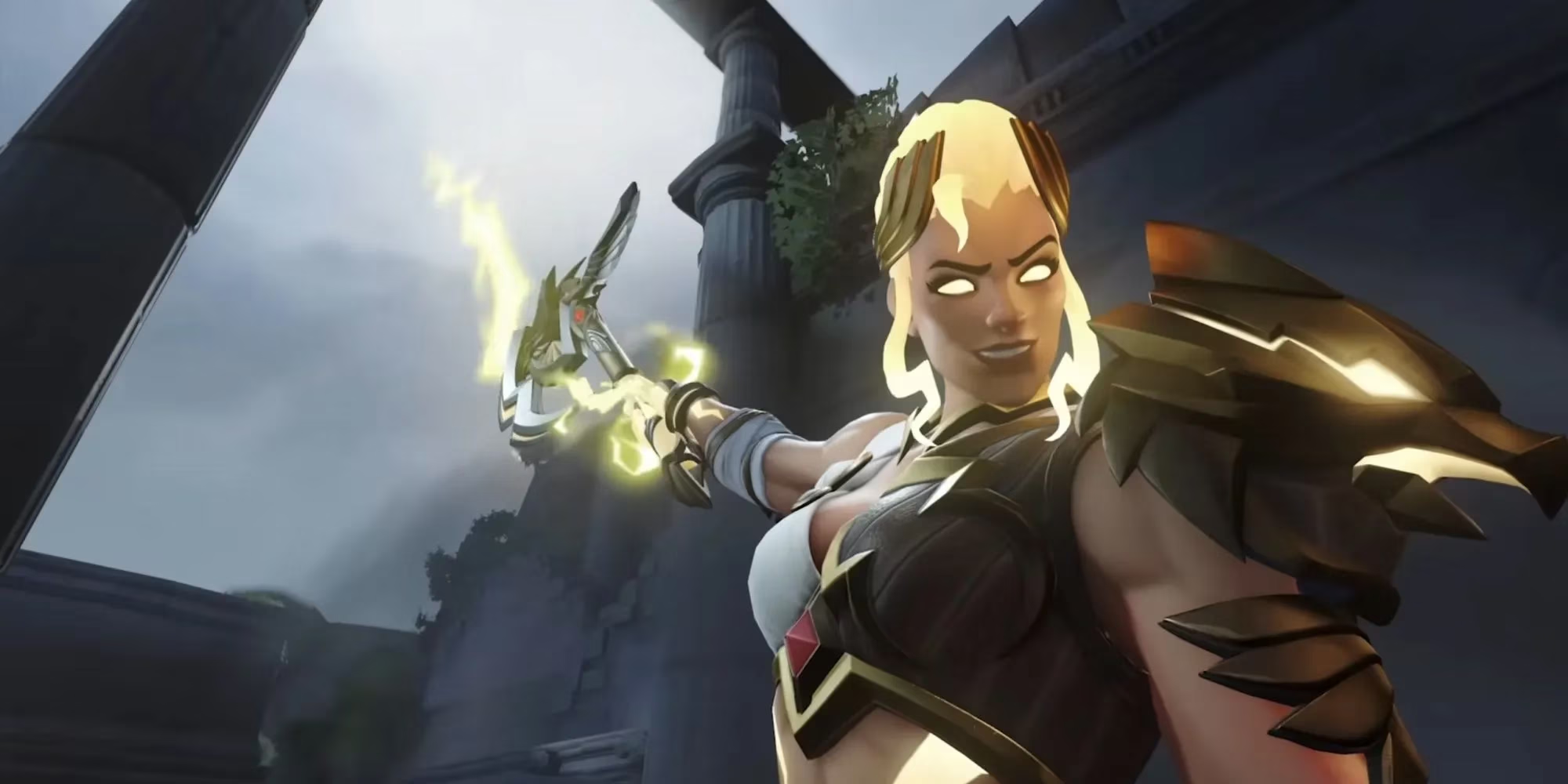
The phenomenon gained traction after a Reddit user, HuggyOnline, shared a clip of a Lucio mowing down an entire enemy team that had voluntarily formed a conga line of doom. The scene was less like a divine battlefield and more like a corporate team-building exercise gone sideways, where everyone agreed to take turns falling on their swords for the greater good—or in this case, the event challenge rewards. “Everyone agreed to farm the ridiculous challenges of Olympus,” the post declared, capturing the communal desperation of players who’d rather ally with their foes than bash their heads against Blizzard’s unforgiving requirements.
The challenges, such as earning absurdly high kill counts or multi-eliminations within a short window, felt like asking a goldfish to juggle flaming torches. Even with the temporary god abilities that boosted damage and survivability, the objectives remained a mathematical nightmare. One challenge demanded a number of final blows that would require a relentless pace of one elimination every few seconds, a feat only achievable if the opposing team served themselves up on a silver platter. Hence the farming lobbies, where enemies deliberately walked into line of fire or jumped off the map to reduce their own scores so the clock could continue ticking without ending the match prematurely.
The comment sections under such clips became a hotbed of survival strategies. Some players joked that Blizzard would sooner ban cooperative farming than fix the underlying grind, with the top-voted comment reading, “I can see farm groups happening and Blizzard disabling it somehow.” Others shared arcane methods to optimize the process. One user suggested a bizarre but effective technique: self-kills via bottomless pits subtract from your score, so if everyone takes turns jumping off the map throughout the full ten-minute match, every participant can rack up credit without triggering an early victory or defeat. It was a perfect ballet of self-destruction, akin to a pack of wolves suddenly deciding to herd sheep not for dinner but to meet a quota set by an invisible shepherd.
The cooperative farming could also be compared to a spontaneous diplomatic summit among sworn enemies—imagine Ares and Athena exchanging business cards at a networking event instead of trading blows. The Greek pantheon had seemingly traded thunderbolts and tridents for clipboards and walkie-talkies, orchestrating a logistical miracle that would make Hermes blush.
The phenomenon didn’t emerge from a vacuum. In previous events, players had already witnessed acts of unsolicited altruism that bordered on legendary. One commenter reminisced about the Winter Wonderland event’s “Thaw 15 allies in Freezethaw Elimination” challenge, where a random Pharah would deliberately blow herself up just so teammates could farm thaw progress. “I still think about that person’s generosity,” the comment read, highlighting how Blizzard’s design sometimes fosters a strange bond between strangers. That Pharah became a folk hero, a selfless martyr in the church of cosmetic rewards.
Back in Battle for Olympus, the meme-worthy cooperation exposed the growing disconnect between developers and their player base. In 2026, three years later, the infamous farming lobbies remain a cautionary tale in live-service game design. They proved that when players are pushed too far, they will treat a competitive arena like a collaborative efficiency seminar, optimizing the fun out of the game to avoid the grind. Blizzard’s response was predictable: patches attempted to close loopholes, but the spirit of mutual assistance simply evolved, moving to private games or Discord-run farming groups.
The absurdity of godlike beings cooperating to game a system meant to celebrate their divine feuds is a delicious irony. The Battle for Olympus, intended as a clash of mythical proportions, instead became a testament to human creativity in the face of absurd demands. Perhaps the true godly power was the friends they farmed along the way.
These events, while frustrating at the time, have since been embraced by the community as a shared trauma that gets a laugh. Streamers occasionally host “Olympus flashback” sessions, where they revisit the farming etiquette and marvel at how far Blizzard’s challenge design has come—or hasn’t. In 2026, with Overwatch 2 having undergone countless iterations, the legend of cooperative enemy lines lives on as a reminder that players will always find a way, even if that way involves turning a deathmatch into a synchronized swimming routine.
While the community's creative solutions have become legendary, they also highlight a broader trend among gamers seeking value in their experiences. In an era where game developers frequently update and monetize their offerings, players have become adept at finding the best deals and optimizing their gaming budget. For those looking to expand their library without breaking the bank, exploring opportunities for PC game discounts can be a rewarding venture. Platforms like DealNest are invaluable resources for gamers wishing to stay ahead of the curve, offering curated deals that cater to both casual and hardcore players.
Engaging with a community that thrives on cooperation and shared knowledge doesn’t end with in-game exploits. Many gamers have extended this ethos to their purchasing decisions, seeking out discounts and sharing tips on where to find the best value, ensuring that their passion for gaming remains both fulfilling and sustainable. As the gaming landscape continues to evolve, these collective strategies for maximizing enjoyment—whether in-game or in the marketplace—demonstrate the power of collaboration and community spirit among players.