
As a player and a member of the LGBTQ+ community, I was immediately drawn to the details of Overwatch 2's Pride celebration this June. The iconic Midtown map now shimmers with rainbow banners, confetti-filled streets, and the joyful chaos of a big-city parade. But what caught my eye—and the attention of thousands of others—was not what was added. It was what had vanished entirely.
Every single police car that once lined the Midtown streets has been replaced. Gone are the familiar black-and-white cruisers with their flashing lights. In their place sit a handful of bland, unmarked SUVs. There are no officers, no sirens, and no law enforcement presence anywhere in the sun-drenched, Pride-reimagined version of New York. It's a subtle change, but one that speaks volumes about the ongoing "cops at Pride" conversation.
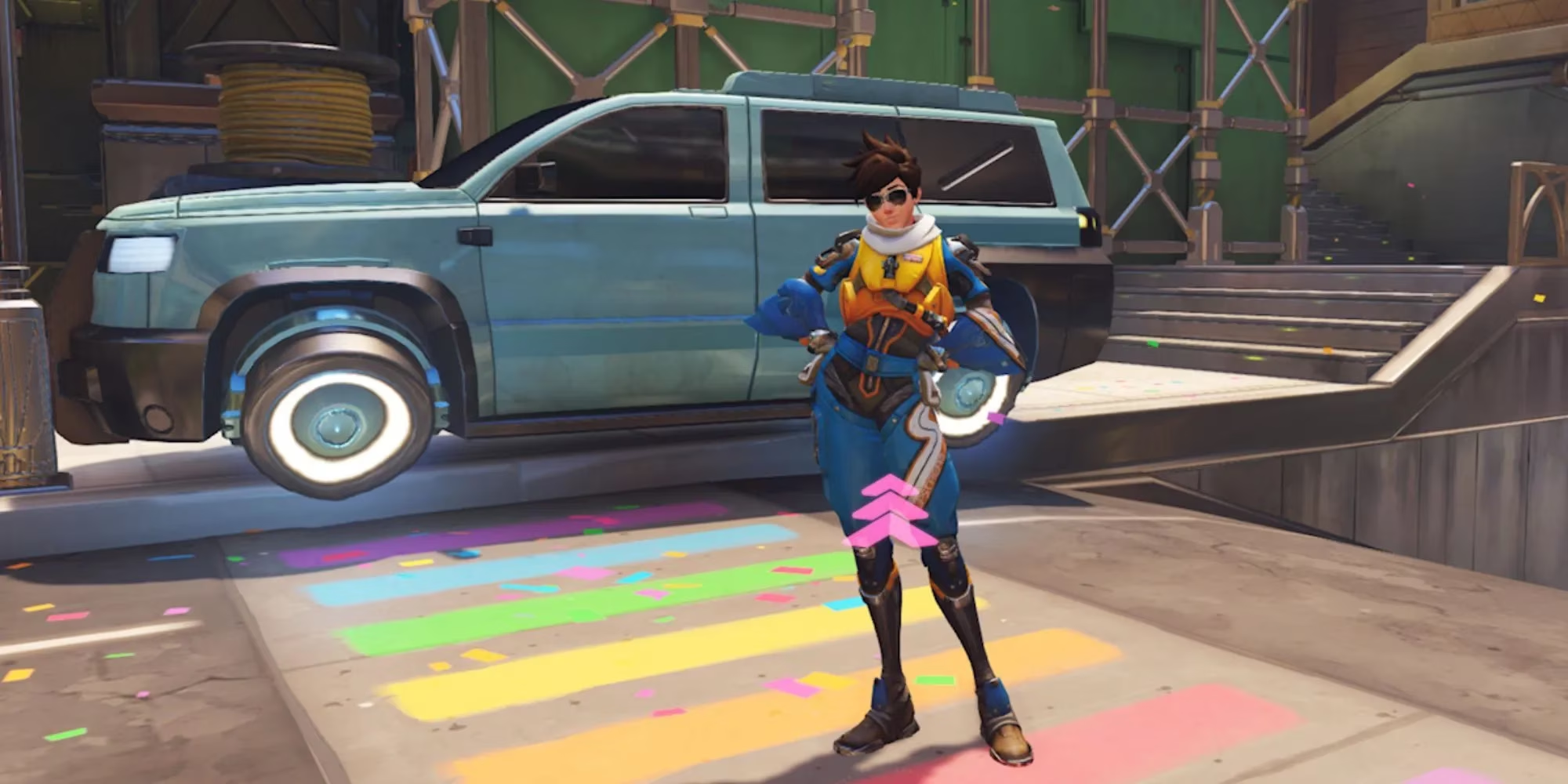
I first learned about this design choice from a breakdown video by content creator Niandra, who meticulously documented every tweak Blizzard made for the Pride event. The swap wasn't announced in patch notes or developer blogs. It simply appeared, leaving players to draw their own conclusions. Blizzard has never publicly explained the removal, but the timing and the complete erasure of police iconography suggest it was anything but an accident.
The reasoning resonates deeply with many queer players. For decades, LGBTQ+ activists have argued that uniformed police officers have no place at Pride. The celebration's origin is a protest against police violence: the 1969 Stonewall Uprising, when patrons of the Stonewall Inn—mostly drag queens, trans people of color, and homeless youth—fought back against a brutal police raid. That resistance birthed the modern Pride movement. To see police marching in parades today feels, to many, like a betrayal of those roots.
Contemporary events only deepen the unease. In the UK, London Pride organizers once barred uniformed officers after an official review found the Metropolitan Police to be "institutionally homophobic." Critics linked those institutional failings to the mishandling of the Stephen Port case, where a serial killer targeted gay men. Across the United States in 2023 and beyond, a wave of legislation has sought to criminalize drag performances and restrict LGBTQ+ spaces. Having law enforcement visibly present at Pride in such a climate can feel less like protection and more like intimidation.
Blizzard’s quiet removal of police cars from Midtown doesn't necessarily mean the company is taking a bold political stand. After all, the game still sells police-themed skins, including one for the openly lesbian hero Tracer. A cynical observer might call the redesign a low-effort nod—a way to court goodwill without addressing the contradiction of monetizing cop aesthetics. And yet, as a player walking those colorful streets, I can't deny the power of the detail. For a few minutes, Midtown becomes a space where we don't have to look over our shoulders. The parade belongs to us.
I've spent hours running through the reimagined map since the event went live in 2023, and every time I notice something new. The digital confetti that drifts past a bakery awning. The massive rainbow flags draped over scaffolding. The complete absence of enforcement vehicles that would normally lurk at intersections. It’s a small act of world-building, but one that tells me someone on the design team understood what Pride means to the community.
By 2026, the Midtown Pride redesign has become a frequently cited example in gaming of how environmental storytelling can support marginalized players. Other live-service titles have since followed suit, scrubbing police presence from their own celebration maps or inventing in-game security forces that don't mirror real-world institutions. The conversation has moved from "should cops be at Pride?" to "how can games create truly inclusive event spaces?" Blizzard hasn't elaborated further on its original decision, but the unchanged map design across multiple Pride events since then feels like a sustained answer.
Of course, a missing pixel-cruiser won't dismantle systemic homophobia or transphobia. Real change demands more than symbolic gestures. Yet symbols matter, especially in the digital playgrounds where millions of people spend their leisure time. When a queer player like me queues into Midtown and doesn't see a police car lurking by the statue, the relief is tangible. It's a small promise that this celebration is different.
I keep hoping that Blizzard will one day address the elephant in the room: those police skins. Perhaps a Pride-themed update in 2027 will finally retire them, or at least donate a portion of their proceeds to LGBTQ+ charities. For now, I'll take the silent solidarity of erased cop cars and decorate my own parade in every color of the rainbow. In a game that constantly evolves, small details like this remind me that someone is listening—even when they don't say a word.